One Piece Manga: Your Complete Beginner’s Guide to Starting the Greatest Adventure
You know that feeling when you discover something so good that you immediately want to tell everyone about it? That is what happens when people start reading the One Piece manga. For over two decades, this Japanese comic series has captured hearts in ways that most stories never achieve. The numbers alone are staggering—over 500 million copies sold worldwide, translated into dozens of languages, and a fanbase that grows stronger every single year.
What makes this particular manga different from the endless shelves of other series is simple: it genuinely cares about you as a reader. It does not waste your time with meaningless battles or forgotten characters. Every single chapter builds toward something bigger, and you will find yourself emotionally invested in characters who never existed outside of black ink on white paper.
Why This Manga Series Changed Everything
Let us be direct about something: the manga industry is flooded with series. Most come and go within a few years. Some have impressive artwork but hollow stories. Others have interesting plots but forgettable characters. The One Piece manga refuses to be just one thing.
It is a comedy that makes you genuinely laugh out loud. The running gags land perfectly, and the author has a gift for physical comedy that translates perfectly to the page. A character might pull a giant hammer from nowhere, or another might accidentally destroy something expensive in the most absurd way possible. These moments feel natural, not forced.
Where This Manga Fits in Modern Reading Culture
In 2024, manga enjoys mainstream popularity in North America like never before. It is no longer a niche hobby. Your coworkers read it. Your teenager reads it. Your college professor probably reads it. The One Piece manga sits at the absolute center of this cultural moment.
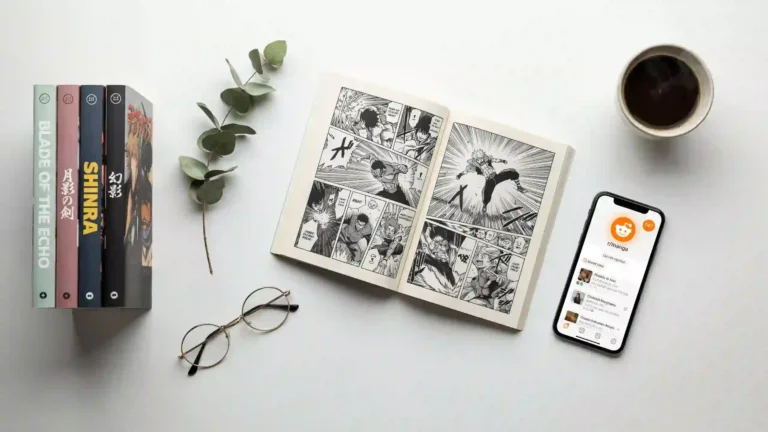
What changed the game was accessibility. Digital reading platforms made jumping into the series easier than buying a single book. Streaming services adapted the story into anime that brought millions of new readers into the fandom. Box sets became affordable collectibles that look beautiful on shelves. Suddenly, there was no barrier to entry.
.
Understanding the Core Story: What You Are Actually Reading
The One Piece manga follows Monkey D. Luffy, a boy whose body became rubber after he accidentally ate a cursed fruit in the ocean. He was not forced into piracy. He chose it because he fell in love with the idea of absolute freedom and adventure. Now he sails the seas searching for the greatest treasure ever hidden—the One Piece—which promises to make him King of the Pirates.
He does not travel alone. His crew grows throughout the series, with each member bringing their own backstory and personal dreams. There is a swordsman obsessed with becoming the world’s greatest fighter. A navigator who dreams of mapping the entire world. A cook protecting a recipe that could change lives. A doctor who wants to cure any disease. These are not shallow character archetypes. They are fully realized people with histories, traumas, and motivations that feel genuine.
How Beginners Successfully Start Reading
Plenty of people feel intimidated by the length and do not know where to begin. The good news is that starting the One Piece manga is genuinely simple.
Start with Volume 1, Chapter 1: It is titled “Romance Dawn,” and it is a masterclass in introducing a story. You meet Luffy in the first few pages. Within the first chapter, you understand his dream, his personality, and why he matters. The author does not waste time with confusing backstory or complex lore. You are immediately hooked into his world.
The Complete Box Set Guide for Collectors
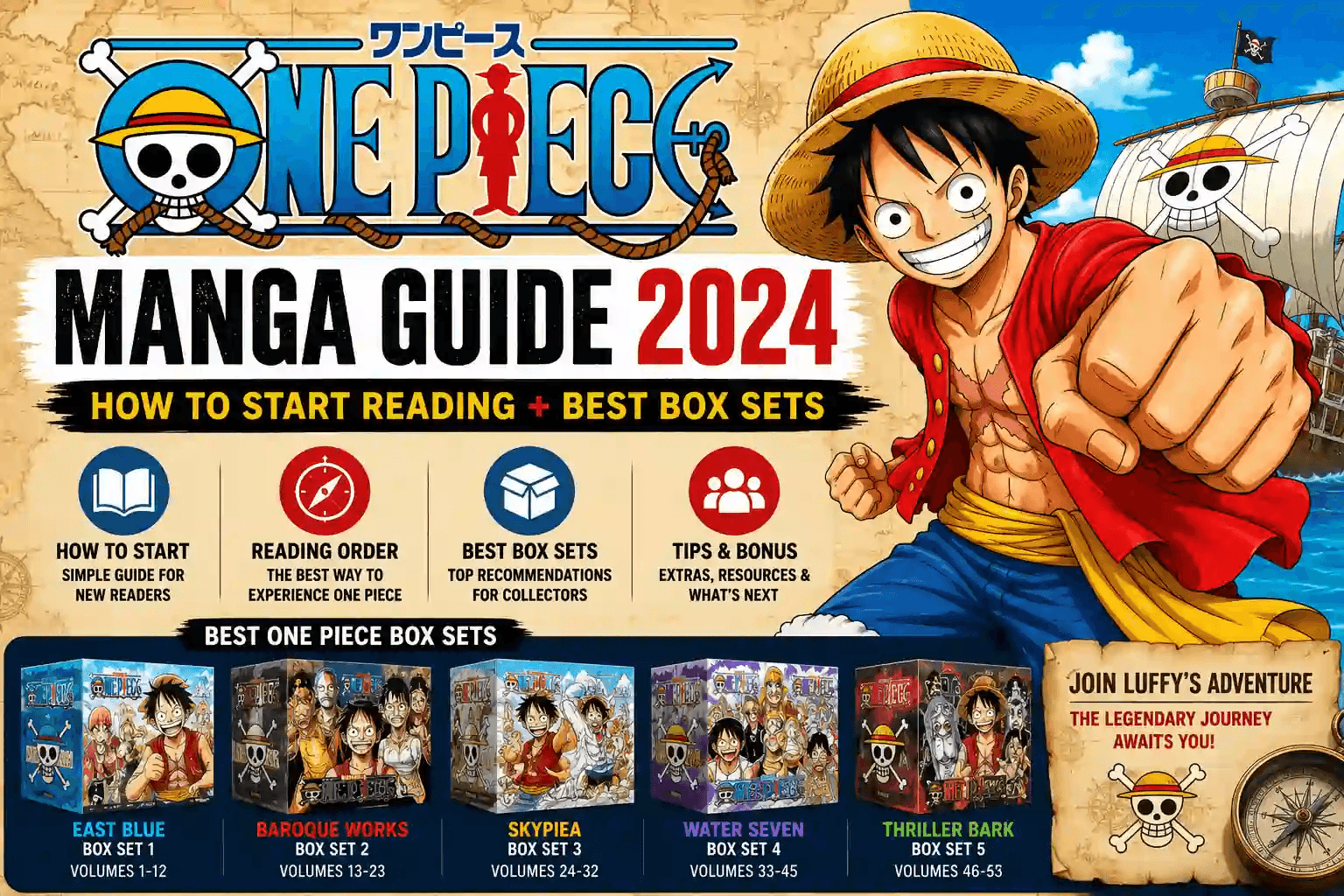
If you decide to build a physical collection, understanding the box sets available saves money and prevents confusion. These are the current main releases available in North America:
Box Set 1: East Blue & Baroque Works
- Volumes: 1-23
- Story Arcs: Romance Dawn, Morgan the Clown, Arlong Park Tragedy, Buggy’s Scattered Crew, Alabasta Kingdom
- Price Range: $115-$145 USD
- What’s Included: Original manga volumes, double-sided color poster featuring the main crew, exclusive behind-the-scenes booklet, protective box
- Why Start Here: This set covers the foundation. You meet every major character in the initial crew and understand why their bonds matter. The Arlong Park arc is genuinely emotional and sets the tone for how the series handles serious themes.
Box Set 2: Skypiea to Water Seven
- Volumes: 24-46
- Story Arcs: Skypiea Island Adventure, Long Ring Long Land Tournament, Water Seven’s Mechanical Wonders, Enies Lobby Government Clash
- Price Range: $120-$155 USD
- What’s Included: 23 volumes, specialty poster featuring sky islands and architecture, character relationship sticker sheet, color booklet with artwork
- Why Collectors Love It: The middle volumes introduce the series’ best mystery elements. Enies Lobby is where many fans say the story truly becomes legendary. The writing becomes more sophisticated.
Box Set 3: Thriller Bark to Marineford War
- Volumes: 47-70
- Story Arcs: Thriller Bark Horror Mystery, Sabaody Archipelago Auction House, Impel Down Prison Break, Marineford War and Aftermath
- Price Range: $130-$165 USD
- What’s Included: 24 volumes, premium metallic-finish poster, mini exclusive comic featuring side characters, color booklet with character timelines
- Why It’s Worth It: The Marineford War arc is considered a turning point. It reshapes the entire pirate world and has emotional payoffs that require hundreds of chapters of buildup to truly appreciate.
Box Set 4: New World Beginnings
- Volumes: 71-90
- Story Arcs: Fishman Island Discrimination Issues, Punk Hazard Poisoned Island, Dressrosa Toy Maker, Whole Cake Island Wedding Chaos
- Price Range: $135-$170 USD
- What’s Included: 20 volumes, double-sided color poster showing the New World map, exclusive mini-comic, art booklet, sturdy cardboard housing
- Why New Fans Appreciate It: This set marks a shift in tone and complexity. The story acknowledges that Luffy’s actions have real consequences. Villains become more sympathetic. The art quality dramatically improves.
Pro Tips for Smart Collectors:
- Wait for sales during Black Friday, Prime Day, or back-to-school periods when prices drop 20-30%
- Check library sales where beat-up box sets sell for half price
- Compare prices across Amazon, Barnes & Noble, and specialty anime retailers
- Start with one box set to test if physical collecting brings you joy
- Store vertically on shelves to prevent spine damage
- Avoid direct sunlight which can fade covers over time
The Format Showdown: Digital vs. Physical Reading
This question comes up constantly in fan communities. Both have legitimate advantages, and the right choice depends entirely on how you live.
Digital Reading Wins When:
- You travel frequently and want instant access
- You prefer reading on tablets or e-readers
- You want to try the series before investing in books
- You like reading at night without a lamp
- You want the most current chapters immediately after release
- You are on a tight budget
The Shonen Jump app offers official English translations with no delays. The artwork renders beautifully on high-resolution screens. You can adjust text size and reading direction. The monthly subscription costs less than a single physical volume.
Physical Volumes Win When:
- You enjoy the tactile experience of holding books
- You want to build a visible collection you are proud of
- You like re-reading favorite passages by flipping pages
- You prefer owning something that does not depend on a subscription
- You want to loan books to friends who might enjoy them
- You appreciate the visual impact of a full shelf
There is something genuinely rewarding about completing a saga and placing the box on your shelf. Your eyes can instantly see your progress. Other people visiting your home see your taste in stories reflected in physical form.
The Hybrid Approach (Most Popular):
Many dedicated fans read new chapters digitally for speed and convenience, then slowly collect box sets of their favorite arcs to reread and display. This gives you the best of both worlds. You stay current with the community, but you also build something tangible.
The Story Arcs That Broke Everyone’s Hearts
Not all arcs in the One Piece manga carry equal weight. Some are adventure setup. Others are absolutely transformative experiences that fans reference constantly.
Water Seven & Enies Lobby (Volumes 34-45)
This two-part saga introduces the concept of “crew abandonment.” Luffy’s best friend Usopp leaves the crew because of a disagreement. Then the World Government captures another crew member. What unfolds is a rescue mission against an organization so powerful that it commands an entire country.
The emotional core is simple: the crew burns down the government’s flag. This act declares war. It shows that friendship matters more than staying safe. The arc climaxes with a moment so powerful that fans still use it as a reference point when discussing what makes this series special.
Marineford War (Volumes 55-61)
The title does not oversell it. This is literally a war between pirates and the global military. A major character dies. The entire pirate era shifts. Nothing is the same after this arc concludes. The aftermath affects every subsequent story thread.
What makes it legendary is the buildup. You spent 55 volumes growing attached to secondary characters, understanding their relationships, learning their histories. Then they show up in the war, and every appearance hits because you know exactly what they mean to each other.
Wano Country (Volumes 92-current)
This recent arc combines samurai honor with Eastern philosophy and the series’ biggest power scaling. The art reaches new levels of detail. Double-page spreads that show significant moments receive treatment that rivals fine art. The stakes feel different because you are no longer just fighting a local villain—you are challenging one of the Four Emperors, the most powerful pirates alive.
Dressrosa (Volumes 71-80)
This arc proved that the series could evolve without losing its heart. The world building deepens. The mysteries layer on top of each other. A villain named Doflamingo forces Luffy to question his own strength and limitations. The resolution involves multiple crews working together, expanding the scope of the story permanently.
Arlong Park (Volumes 6-11)
Do not let the early placement fool you. This arc taught readers that the series does not shy away from serious topics. A tyrant oppresses an entire species based on racism. One crew member gets personal revenge for family genocide. The story treats this with gravity, not as throwaway backstory.
The Art, Themes, and Hidden Layers
The visual style of the One Piece manga is immediately distinctive. Characters have exaggerated proportions. Expressions are cartoonish. Eyes take up half of a character’s face. Nothing about the drawing style screams “serious literature.”
This is entirely intentional. The playful art style is a disguise that lets the author sneak profound themes into your head while you are smiling at a character’s silly expression.
What the Visual Style Actually Communicates:
The rubber body represents resilience. You bounce back no matter how hard life hits. You cannot be permanently bent out of shape by difficulty. This is Luffy’s entire philosophy, expressed through his physical form.
The colorful, varied character designs show that strength comes in unexpected packages. The crew member who fights with a gun wears a patterned suit. The swordsman has green hair. The navigator wears orange. Normal standards of “tough guy” appearance do not apply. Strength is about inner conviction.
The Deeper Themes Hidden in the Story:
Freedom versus Responsibility: The series constantly asks if true freedom means doing whatever you want or protecting those you love even when it costs you. Luffy’s answer is nuanced and evolves throughout the story.
Systemic Oppression: The World Government is not portrayed as a simple villain. It is a system that crushes people in the name of order and control. Entire cultures are erased from history. Races are enslaved. These are not small moral issues.
The Power of Memory: One of the deepest arcs revolves around a kingdom that was completely removed from history. The very existence of these people was erased. The story argues that remembering these forgotten people gives them power. Legacy matters.
Inherited Will: Characters are not just products of their immediate circumstances. They inherit dreams, motivations, and even enemies from previous generations. Breaking these cycles requires active choice and courage.
Connection Over Strength: Throughout the series, the strongest individual fighter does not win. Connection, loyalty, and teamwork overcome raw power. This message appears constantly.
Building Your Collection Without Overwhelming Your Wallet
Collecting the entire One Piece manga series does not require winning the lottery. Smart buying strategies let you build an impressive collection gradually.
Budget-Friendly Approaches:
Start with Volume 1: Buy it. Test if you enjoy the series. If you do not like it after giving it a fair chance, you lost $10 and learned something about yourself. If you love it, you proceed to the next step.
Alternate Between Digital and Physical: Read new chapters digitally to stay current. Buy box sets of completed arcs during sales. This spreads costs over time and gives you something physical to cherish.
Hunt for Sales:
- Black Friday typically offers 20-30% discounts on box sets
- Amazon Prime Day includes manga deals
- Local bookstore sales happen throughout the year
- Holiday gift sets sometimes bundle multiple volumes at reduced prices
- Online retailers like RightStuf frequently run promotions
Check Your Local Library: Many libraries stock manga series. You can read for free and determine if certain arcs deserve purchase.
Join Fan Communities: Reddit communities like r/OnePiece and Discord servers often share information about sales and restocks. Other collectors give genuine recommendations on which sets offer best value.
Display and Protection Tips:
Once you own physical volumes, treat them well:
- Store spines outward so you can see the cover art
- Stack horizontally if you run out of shelf space (prevent spine damage)
- Keep away from direct sunlight (fades colors over 6-12 months)
- Use bookends to prevent volumes from warping
- A glass bookshelf or entertainment unit offers dust protection
- Handle with clean, dry hands (oils transfer to pages)
A growing collection visible on your shelf becomes a conversation starter. People notice it and ask questions. You end up introducing the series to friends who become lifelong fans.
FAQs
Q: Is the manga actually finished, or will I be waiting forever for the ending?
A: Eiichiro Oda has confirmed the story is in its final saga. That means we are building toward the conclusion, but this final section will likely require 2-3 more years of publication. You are not starting a series that might never finish. But you are also not reading something that concludes next month. The timeline is realistic.
This is actually perfect for new readers. You get to experience current content and join the global conversation about where the story is heading. You are not years behind. You are genuinely current.
Q: How many total volumes exist right now?
A: Over 105 volumes have been released in Japan, with English translations releasing regularly. The number feels daunting until you realize that quality manga is meant to be savored, not rushed. Reading one volume per week means you will take two years to catch up. That is not a burden. That is two years of consistent entertainment and emotional investment.
Q: Can kids safely read this series?
A: The manga publishes in a magazine for boys ages 12 and up. There is cartoon violence—characters fight, get hurt, occasionally bleed—but it is not graphically gory. Language includes occasional mild words but nothing explicit.
The heavier content involves themes: death, slavery, racism, government oppression. These are treated seriously, not as jokes. A parent reading alongside a younger child creates opportunities to discuss justice, courage, and standing up for others. Many families view this as educational material, not just entertainment.
Q: Why do fans say the manga is better than the anime?
A: The anime adaptation is actually excellent and introduces many people to the series. But the manga has specific advantages:
- Pacing: The manga moves fast. The anime sometimes stretches scenes across multiple episodes, which can feel slow
- Artist’s Vision: You see Eiichiro Oda’s original artwork without filters or animation limitations
- No Filler: The manga contains zero filler. Every chapter moves the plot forward. The anime adds original content not in the source material
- Emotional Impact: Reading emotional moments at your own pace often hits harder than watching them animated
Neither is objectively “better.” They serve different purposes. Many fans enjoy both.
Q: Do I have to read the cover stories and SBS columns?
A: These are supplementary but honestly worth reading:
Cover Stories: Usually illustrated in 2-3 pages per chapter, they follow what happens to characters Luffy left behind. These are not throwaway content. They develop characters further and occasionally become relevant to later main plots. Skipping them means missing depth.
SBS Question-and-Answer Section: In this corner, Oda responds to fan mail and shares personal trivia. Jokes, character designs, creator commentary, canon facts—all appear here. You learn things about the world that official chapters never mention.
These extras transform the reading experience from “just following the main plot” to “understanding how this world actually works.”
Q: Is starting a 100+ volume series really worth it?
A: Ask 10,000 people who have read One Piece, and approximately 9,900 will tell you yes. Here is why:
The length is not a weakness. It is the series’ superpower. You get 100+ volumes to develop attachment to characters. You watch them grow. Their victories feel earned. Their losses feel meaningful. By the time you reach major emotional moments, you have hundreds of chapters of context embedded in your memory.
Compare this to a shorter series. By the time you are attached, it ends. One Piece does the opposite. It gives you years of companionship. The investment pays dividends in emotional resonance.
Plus, there is no rush. This is not a timed game. Read at whatever pace brings you joy. Some people read a volume per week. Others take a month. Both approaches reveal different beauties in the story.
Conclusion
Everything in this guide points toward a simple truth: the One Piece manga is worth your time, whether you are 14 or 40, whether you grew up reading comics or you have never held one before.
This is not a story that will bore you or waste your hours. It is not a series designed for one specific demographic that everyone else should avoid. It is a genuinely universal adventure that speaks to something human: the desire for freedom, the value of friendship, and the power of refusing to give up when the world says you should.