Why the Vagabond Manga Stays With You Long After You Close It
You start reading expecting flashy sword fights. What you get stops you cold. The vagabond manga digs into loneliness, purpose, and the brutal work of becoming a better human. Musashi Miyamoto’s story, told through Takehiko Inoue’s brush, has sold over 82 million copies for a reason. The sword swings don’t just hit enemies. They hit your own doubts.
What Is the Vagabond Manga?
The vagabond manga is a seinen series written and illustrated by Takehiko Inoue. Kodansha’s Morning magazine started serializing it in 1998. The story reimagines the life of legendary swordsman Miyamoto Musashi, loosely adapting Eiji Yoshikawa’s novel Musashi.
Quick Facts: Vagabond Manga
| Detail | Information |
|---|---|
| Author/Artist | Takehiko Inoue |
| Volumes | 37 tankōbon |
| Source Novel | Musashi by Eiji Yoshikawa |
| Main Rivals | Sasaki Kojirō, Yoshioka School |
| English Publisher | Viz Media |
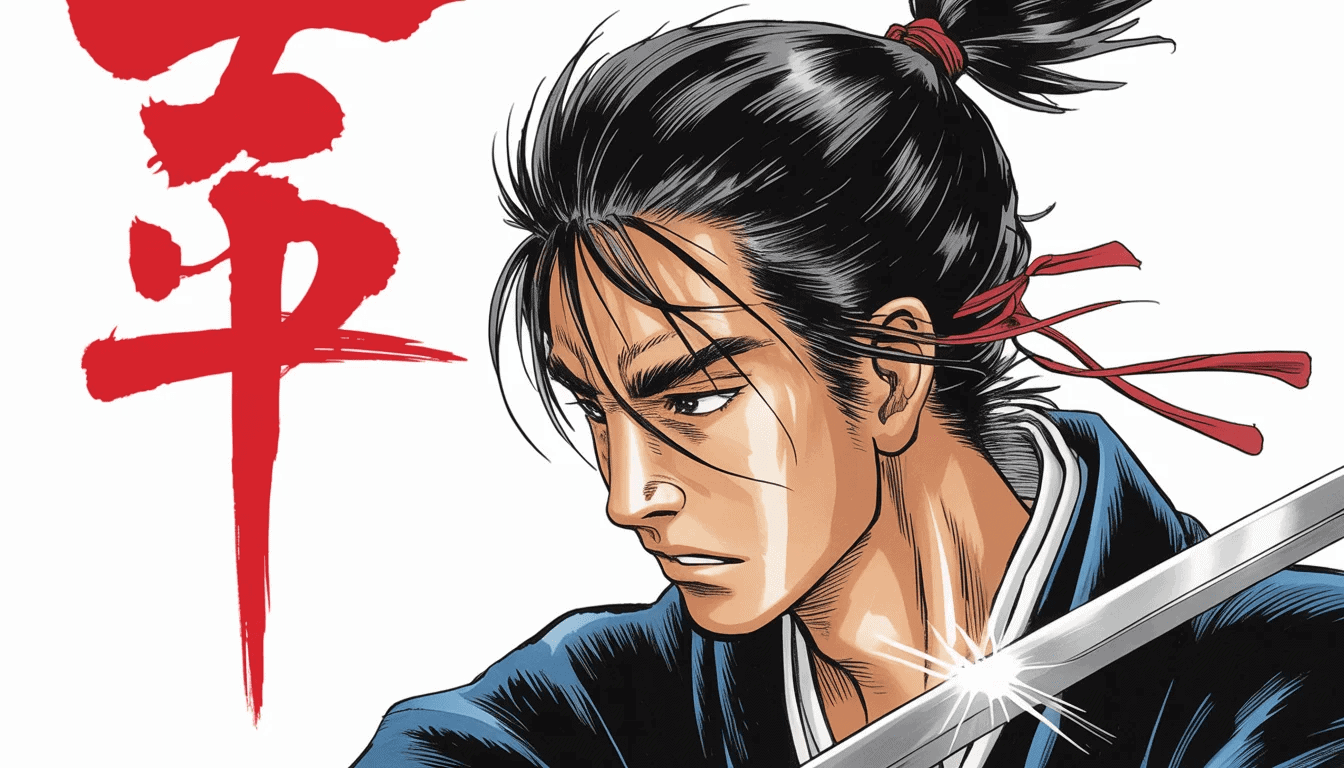
Unlike the novel, Inoue gives Sasaki Kojirō a moving backstory as a deaf-mute warrior. He also pours calligraphy and ink-wash painting into every chapter, creating a visual style no other manga matches.
A Brutal, Beautiful Origin Story
The vagabond manga opens at the Battle of Sekigahara in 1600. Two boys crawl out of the dead. Takezō, violent and wild, becomes a hunted animal. A monk named Takuan captures him, hangs him from a tree, and forces a choice: die a beast or become a man. That moment births Musashi.
His journey takes him through duels with spear monks, the entire Yoshioka sword school, and an old master whose calm cuts deeper than any blade. Through farming, failure, and rare moments of grace, Musashi stops fighting the world and starts facing himself.
The Real History Behind the Story
Miyamoto Musashi lived from 1584 to 1645, won over 60 duels, and wrote The Book of Five Rings. The vagabond manga borrows freely from this record. Characters like Otsū and Matahachi are pure invention, yet they carry the emotional weight of real people. Scholars have analyzed the series through Bushido ethics and psychology, proving its depth goes far beyond entertainment.
Takehiko Inoue: The Creator
Inoue first conquered basketball manga with Slam Dunk. Then he picked up a brush and started the vagabond manga. Critics doubted the switch. Awards silenced them. The series won the Kodansha Manga Award, the Japan Media Arts Festival Grand Prize, and the Tezuka Osamu Cultural Prize. Inoue also funds scholarships for young basketball players, channeling his success into real-world good.
Art That Breathes
Brush pens and ink create panels that feel alive. Hair strands move. Bamboo sways. Rain streaks like a photographer caught it mid-fall. The vagabond manga proves comic art stands equal to gallery paintings. This visual density also explains why no anime adaptation exists — capturing that detail in motion poses an enormous challenge.
Characters That Refuse to Let Go
Every sword in the vagabond manga carries a soul. Musashi transforms from a feral killer into a warrior who understands that conquering himself matters most. Kojirō, the deaf-mute rival, speaks through action and becomes nature itself. Matahachi, the cowardly friend, mirrors the parts of ourselves we hate to admit. Otsū anchors the story with quiet love. Takuan the monk speaks truths sharper than any katana.
Story Arcs You Can’t Skip
The Takezo Arc shows the messy birth of a samurai. The Hōzōin Arc pits Musashi against a spear prodigy who mirrors his old self. The Yoshioka Arc delivers a 70-man battle that drains body and spirit. The Kojiro Origin Arc pauses everything to give a rival his heartbreaking history. The Farming Arc, widely considered the series’ peak, replaces swords with rice paddies and teaches more about strength than any duel.
Why the Vagabond Manga Paused
In 2015, Inoue stopped drawing new chapters. Physical strain from the detailed art and a creative crossroads put the vagabond manga on indefinite hiatus. He has said he cannot wait to draw it again. Viz Media keeps releasing hardcover Definitive Editions, with Volume 6 coming in August 2026. The passion for this story hasn’t faded.
Will We Ever See the End?
Inoue created an exhibition chapter showing an aged Musashi’s peaceful final moments. But the duel at Ganryū Island, the most anticipated fight in the series, remains undrawn. If the vagabond manga returns, that showdown will arrive carrying decades of expectation. Whether the ending gets officially serialized or not, the journey already holds its own kind of closure.
A Legacy Carved in Ink
Eighty-two million copies sold. Three major awards. A generation of readers who see manga differently because of it. The vagabond manga stands beside Berserk and Vinland Saga as a pillar of mature storytelling. It needs no anime, no movie, no spin-off. Its power lives entirely on the page.
Frequently Asked Questions
Will the Vagabond manga receive an anime?
No official adaptation exists. Rumors of interest from Studio Fortiche surfaced, but nothing materialized. The art’s complexity makes animation difficult.
How many volumes does the Vagabond manga have?
The vagabond manga spans 37 volumes in Japan. Viz Media publishes them all in English, including ongoing Definitive Editions.
Is the Vagabond manga historically accurate?
It adapts a fictionalized novel, not a textbook. Inoue invents characters and backstories while honoring the spirit of Edo-period Japan.
Where can I read the Vagabond manga legally?
Viz Media offers the vagabond manga in print and digital formats through its website and major book retailers.
Which Vagabond manga arc is best?
The Farming Arc earns the most critical praise. The Kojiro Origin and later Yoshioka arcs consistently rank among fan favorites.
Why is Vagabond manga for mature readers?
Graphic violence, philosophical themes about death, and occasional sexual content classify it as seinen for adults.