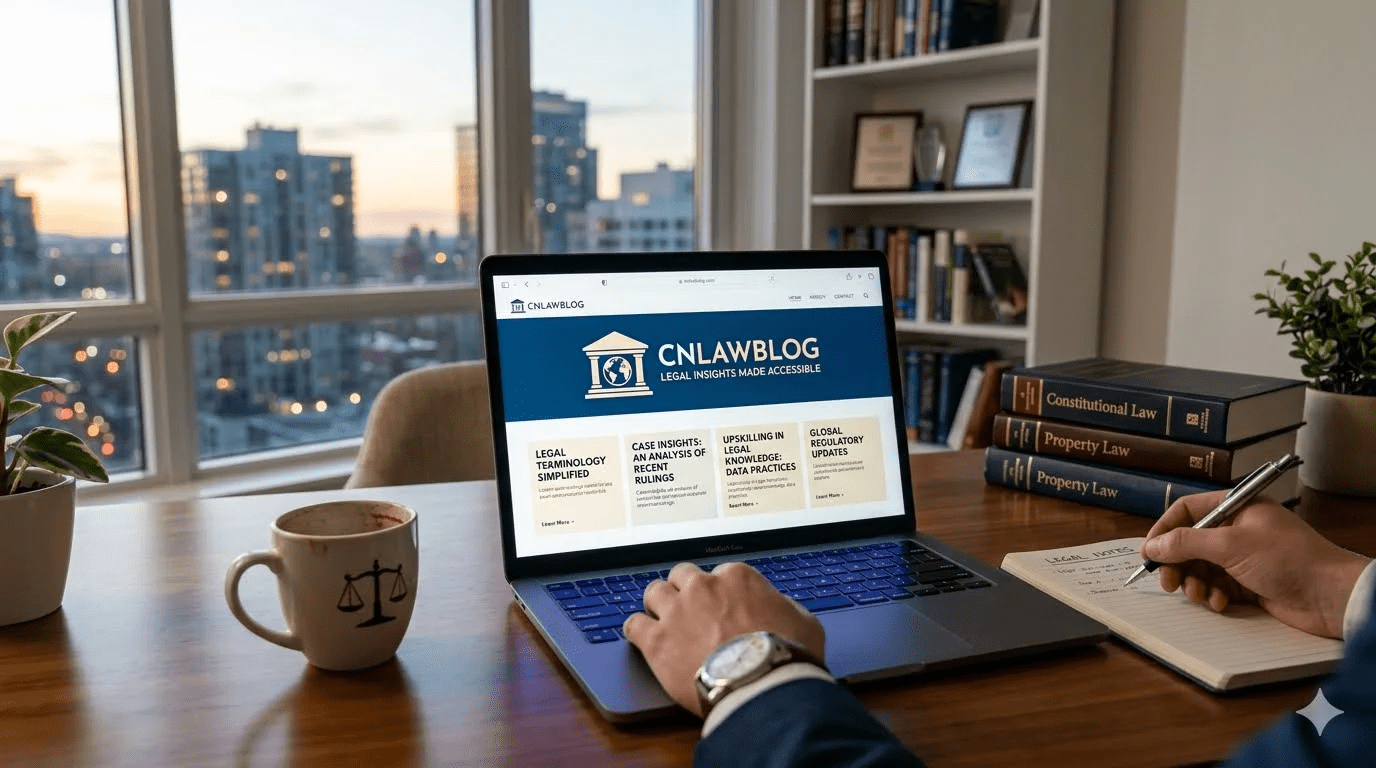
What Is cnlawblog? Your Straightforward Gateway to Legal Clarity
Legal questions hit when you least expect them. A contract lands on your desk. A regulatory notice arrives. A news headline about China’s latest data law makes you pause. Suddenly, you need answers—fast.
cnlawblog steps into that gap. It serves as a freely accessible legal information hub that translates tangled statutes and court rulings into plain, usable English. You do not need a law degree to follow along. You just need curiosity and a few minutes.
This guide walks you through exactly what cnlawblog delivers, who builds the content, which topics it tackles, and how to use it smartly. Let us jump straight in.
1. What Exactly Is cnlawblog?
cnlawblog operates as an independent digital legal blog and content platform. It publishes structured articles across corporate law, civil disputes, criminal procedure, regulatory shifts, and case breakdowns. Each piece aims to replace confusion with clarity—without dumbing down the facts.
The site functions purely as an educational resource. It does not sell legal services, nor does it claim to replace a qualified lawyer. Instead, cnlawblog focuses on explaining how laws work in real situations: starting a business, handling a contract dispute, protecting intellectual property, or responding to a regulatory filing.
What sets cnlawblog apart from formal law firm websites or dense government portals is its commitment to plain language. The writing respects your intelligence while refusing to hide behind jargon. That balance is rare.
2. Who Stands Behind cnlawblog?
A common question surfaces: who writes for cnlawblog? The platform draws on legal professionals, scholars, and bilingual researchers who understand both Chinese and English legal terminology. Some contributors hold formal legal qualifications. Others bring deep experience in compliance, corporate governance, or cross-border trade.
However, cnlawblog does not always display individual author names on every article. This lack of full byline transparency is a weakness worth noting. Reputable legal blogs—such as the China Law Blog run by Harris Sliwoski—name their attorneys clearly. cnlawblog would strengthen its credibility by following that practice more consistently.
Every article carries a clear disclaimer: the content provides general information only, not personalized legal advice. That is standard practice for legal blogs worldwide. It also signals honesty about the platform’s limits.
3. Core Practice Areas Covered
cnlawblog does not limit itself to one narrow lane. Its coverage stretches across multiple legal fields, giving readers a broad yet structured view of the law. Below are the primary areas:
Corporate and Business Law: Company formation, governance structures, contract enforcement, and shareholder rights.
Intellectual Property Protection: Trademark registration through CNIPA, patent strategies, copyright enforcement, and trade secret safeguards.
Data Privacy and Cybersecurity: Detailed analysis of China’s Personal Information Protection Law (PIPL), Data Security Law (DSL), and cross-border data transfer rules.
Foreign Direct Investment (FDI) Regulations: WFOE setup procedures, joint venture rules, and SAMR compliance filings.
Civil and Criminal Law: Dispute resolution pathways, individual rights explanations, criminal procedure breakdowns, and case outcome analyses.
Employment and Labor Law: Hiring practices, termination rules, and workplace compliance inside China’s evolving regulatory framework.
Cross-Border Trade and Disputes: Arbitration strategies, multi-jurisdictional litigation, and NNN agreement guidance for foreign companies.
Each topic receives treatment that connects legal theory to real-world decisions. You learn not just what the law says, but what it means for your next move.
4. Content Quality and Depth: What to Expect
Articles on cnlawblog typically follow a consistent, reader-friendly format. You will find an overview of the legal issue, references to relevant statutes or regulations, practical implications explained in context, and key takeaways summarized at the end.
The writing avoids the two extremes that plague legal content: it is neither overly academic and dense, nor overly simplistic and shallow. cnlawblog occupies a useful middle ground—accurate enough for informed decision-making, yet clear enough for a small business owner or student to grasp quickly.
Several independent reviews confirm this assessment. One analysis notes that the site “focuses on delivering simplified yet accurate explanations of legal principles, helping readers navigate everyday disputes [and] compliance requirements.” Another review emphasizes that the platform “fills a gap that expensive platforms like LexisNexis or Thomson Reuters charge thousands of dollars to fill.”
That said, cnlawblog is not a substitute for tailored legal counsel. Use it as your starting point—not your final answer.
5. Comparing cnlawblog With Other Legal Resources
| Feature | cnlawblog | Harris Sliwoski China Law Blog | LexisNexis / Westlaw |
| Cost | Free | Free | Paid subscription |
| Language | Plain English | Professional English | Technical/legal English |
| Primary Audience | General readers, students, SMEs | Business executives, investors | Legal professionals |
| Author Transparency | Partial (not always named) | Full (named attorneys) | Full (editorial standards) |
| Topic Focus | Broad: corporate, IP, data, FDI | China business law | Comprehensive legal databases |
| Practical Guidance | Strong | Strong | Requires legal training |
| Update Frequency | Regular | Regular | Continuous |
This table highlights where cnlawblog shines and where it could improve. Its strongest advantages are cost (zero) and accessibility (anyone can understand it). Its primary limitation is inconsistent author attribution.
6. Trustworthiness: Can You Rely on cnlawblog?
Trust matters enormously when you read legal content online. Incorrect legal information can lead to costly mistakes.
cnlawblog builds trust through several mechanisms. Every article includes a disclaimer stating the content is general information, not legal advice—a responsible practice common across legitimate legal websites. The platform also references actual statutes, regulations, and court cases, grounding its analysis in verifiable sources rather than mere opinion.
Independent legitimacy checks confirm the site is real, actively maintained, and safe to browse. However, because some articles lack named authors with verified credentials, readers should cross-check critical information against official government sources or consult a licensed attorney before making significant decisions.
The platform would benefit from adding clear author bios, publication dates on every article, and a transparent editorial policy page. These additions would significantly boost its E-E-A-T score.
7. Who Benefits Most from Reading cnlawblog?
cnlawblog serves a surprisingly wide audience. Here is who gains the most value:
Small business owners and entrepreneurs exploring market entry into China or dealing with cross-border contracts.
Compliance officers and in-house counsel who need quick, plain-English briefings on regulatory changes like PIPL updates or SAMR enforcement shifts.
Law students and academics studying comparative legal systems or Chinese business law.
Journalists and policy analysts tracking legal developments in the PRC.
General readers who encounter legal questions in daily life and want a trustworthy starting point before deciding whether to hire a lawyer.
The common thread: each group needs accurate legal information delivered without unnecessary complexity.
8. SEO and Content Strategy Observations
From an SEO and AEO perspective, cnlawblog employs several smart tactics. The platform operates across multiple domains (.com, .net, .org, .blog), which broadens its search footprint. Articles use clear headings, logical structure, and internal linking that helps both readers and search engines navigate the content.
The focus on question-based topics—like “How does PIPL affect foreign companies?” or “What is a WFOE?”. This strategy increases the likelihood of appearing in Google’s AI Overviews and featured snippets.
For content creators studying what works in legal SEO, cnlawblog offers a practical case study in balancing depth with readability. The site demonstrates that you can cover complex legal topics without losing your audience.
9. How to Use cnlawblog Responsibly
Here is a practical approach for getting maximum value from cnlawblog while protecting yourself:
Verify against official sources. Cross-check important details on government websites such as the National People’s Congress database, CNIPA’s official portal, or SAMR announcements.
Consult a licensed attorney for decisions. When real money, liability, or rights are at stake, a qualified lawyer familiar with your specific jurisdiction is irreplaceable.
Check article dates. Laws change frequently, especially in China. An article from 2023 may not reflect 2026 amendments. Look for recent publication or update stamps.
This layered approach turns cnlawblog into a powerful research ally while keeping you grounded in verified information.
10. What cnlawblog Could Do Better
Honest assessment strengthens trust. Here are areas where cnlawblog has room to grow:
Author transparency. Publishing author names, qualifications, and professional backgrounds on every article would dramatically increase perceived credibility and Google E-E-A-T signals.
Editorial policy page. A dedicated page explaining how content is researched, fact-checked, and updated would address reader concerns about reliability.
Consistent dating. Every article should display a clear publication date and, where applicable, a “last updated” stamp.
Citation practices. While articles reference statutes and cases, more frequent direct citations with links to primary sources would strengthen authority.
These improvements would not require a fundamental overhaul—just a consistent commitment to transparency.
11. The Future of Accessible Legal Information
The demand for plain-language legal resources continues to grow. As regulations multiply and cross-border business expands, platforms like cnlawblog fill an essential role. They lower the barrier between complex legal systems and the people who need to navigate them.
Google’s emphasis on E-E-A-T and helpful, people-first content rewards platforms that prioritize accuracy, clarity, and genuine value over keyword tricks. cnlawblog—by focusing on real legal questions and practical answers—positions itself well for this evolving landscape.
The challenge ahead lies in deepening transparency while maintaining accessibility. Platforms that manage both will earn lasting reader trust and strong search visibility.
12. Your Next Step
You came here wanting to understand what cnlawblog offers. Now you know: it is a free, plain-English legal resource covering Chinese law and regulatory topics with practical depth. It is not perfect, but it is useful.
Bookmark cnlawblog for your next legal question. Pair it with official sources and professional counsel when decisions carry weight. And if you found this analysis helpful, share it with a colleague or friend who wrestles with legal complexity—because everyone deserves access to clear, trustworthy legal information.
Frequently Asked Questions
1. Is cnlawblog a legitimate website?
Yes. Independent checks confirm that cnlawblog is a real, active, and safe website that publishes regular legal content without hosting malware or scams. It is not a law firm, and it does not offer personalized legal advice.
2. Does cnlawblog only cover Chinese law?
No. While cnlawblog emphasizes PRC legal topics—such as PIPL, FDI rules, and the Chinese Civil Code—it also addresses cross-border issues, comparative legal analysis, and general legal principles applicable in multiple jurisdictions.
3. Can I rely on cnlawblog for legal decisions?
Use cnlawblog as a starting point for understanding legal concepts, not as a replacement for professional legal advice. Cross-check critical information with official sources and consult a licensed attorney before acting on any legal matter.
4. Who writes the articles on cnlawblog?
Content comes from legal professionals, scholars, and bilingual researchers. However, not all articles display named authors with verified credentials. This is an area where cnlawblog could improve transparency.
5. What topics does cnlawblog cover most frequently?
cnlawblog covers corporate law, intellectual property, data privacy (PIPL, DSL), foreign direct investment (WFOE, joint ventures), employment law, cross-border disputes, and regulatory compliance. It publishes both foundational explainers and timely updates on legal changes.
6. How often does cnlawblog publish new content?
The platform updates regularly with fresh articles responding to new legislation, court rulings, and regulatory shifts. For the most current information, check the site directly and look for recent publication dates.
This article reflects independent analysis based on publicly available information. It does not constitute legal advice. For personalized legal guidance, consult a qualified attorney licensed in your jurisdiction.