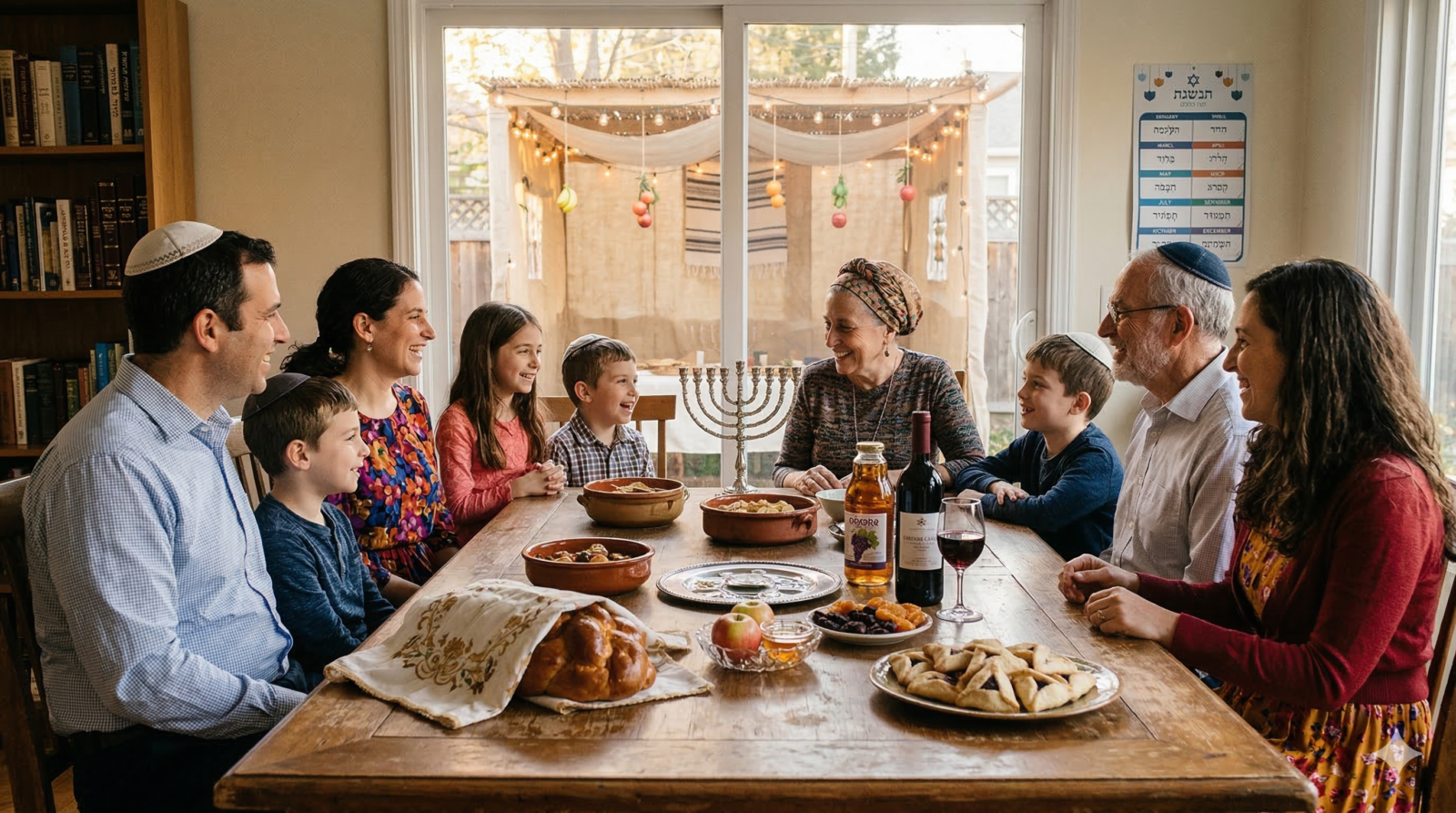
Jewish Holidays
Introduction
Have you ever looked at a calendar and wondered why jewish holidays seem to “move” around so much every year? You are not alone. The Jewish calendar is ancient, beautiful, and a little different from the one we use for everyday life. Unlike the regular calendar that follows the sun only, the Jewish calendar follows both the moon and the sun . This means that while jewish holidays always fall in the same season, the exact dates on your wall calendar change from year to year.
For example, the beloved Festival of Lights, Hanukkah, can start in late November one year or mid-December the next. This guide is here to help you make sense of it all. Whether you are celebrating for the first time, need to plan time off work or school, or just want to understand what your friends and neighbors are celebrating, you have come to the right place. We will walk through the major holidays step by step, covering the jewish holidays 2026 schedule, looking back at 2025 jewish holidays, and even touching on jewish holidays 2024 for context. Let’s embark on this journey through the Jewish year together.
What Makes the Jewish Calendar So Unique?
To truly understand jewish holidays, you have to understand the clock they run on. The Jewish, or Hebrew, calendar is a lunisolar calendar . This means that months are based on the cycle of the moon—each new month begins with the sighting of a new moon. However, because a lunar year is about 11 days shorter than a solar year (the time it takes the Earth to go around the sun), the Jewish calendar adds an extra month periodically. Think of it like a “leap month.” This happens seven times every 19 years to ensure that holidays like Passover, which is a spring festival, always happen in the spring .
Another really important thing to know is that in the Jewish tradition, a day doesn’t start at midnight. It starts at sunset . This is based on the story of Creation in the Torah, which says, “And there was evening, and there was morning.” So, every holiday begins the night before the first date listed on a standard calendar. That is why you will often see holiday observances listed as starting at “sundown.” This rhythm of time, marked by the moon and the sun, gives the jewish holidays a deep connection to nature and to ancient history.
The High Holy Days: A Time for Reflection
The most solemn and important period in the Jewish year is known as the High Holy Days, or the “Days of Awe.” This period begins with Rosh Hashanah, the Jewish New Year, and ends ten days later with Yom Kippur, the Day of Atonement. Rosh Hashanah is not a wild party like you might see on December 31st. Instead, it is a time for deep thought, prayer, and reflection on the past year . It celebrates the birthday of the world. The most famous sound of this holiday is the blowing of the shofar, a ram’s horn, which serves as a spiritual wake-up call. Families gather for festive meals where they dip apples in honey, symbolizing their wish for a sweet new year.
Then, ten days later comes Yom Kippur. This is considered the holiest day of the year . It is a day dedicated to atonement—asking for forgiveness from God and, just as importantly, from other people. It is a 25-hour fast, meaning no food or drink, and a day spent mostly in prayer. It is a powerful and moving experience that resets the soul for the year ahead. For jewish holidays 2026, Rosh Hashanah begins at sundown on September 11th .
Sukkot and Simchat Torah: From Solemnity to Joy
Immediately following the intense seriousness of Yom Kippur, the mood shifts dramatically. The holiday of Sukkot, also known as the Feast of Booths, is a time of great joy . It is both a historical and an agricultural festival. It reminds Jews of the 40 years their ancestors spent wandering in the desert after leaving Egypt, living in temporary shelters called “sukkot” (booths) . To celebrate this, families build a small, temporary hut in their yards or on their balconies. They eat meals in the sukkah, and some even sleep there, under the stars. It is meant to be a fun and fragile structure, reminding us of the impermanence of life and our trust in a higher power.
Right after Sukkot comes a special two-day celebration called Shemini Atzeret and Simchat Torah . Simchat Torah, meaning “Rejoicing in the Torah,” is one of the most fun days on the calendar. It marks the end of the yearly cycle of reading the Torah and the immediate beginning of a new one. In synagogues, people dance and sing with the Torah scrolls, celebrating the never-ending cycle of learning. It is a burst of pure happiness after a month full of deep reflection. For those tracking jewish holidays 2025 dates, Sukkot begins on the evening of October 6th .
Hanukkah: The Festival of Lights
Ask any American to name a Jewish holiday, and Hanukkah is likely the first one they will say. While it is a well-known holiday, it is actually considered a minor one in terms of religious importance. However, its message and beauty are massive. Hanukkah celebrates a miracle that happened over 2,000 years ago. A small group of Jewish fighters, the Maccabees, defeated a mighty Greek army and reclaimed their holy Temple in Jerusalem. When they went to light the Temple’s menorah (lamp), they found only a small jug of pure olive oil that should have lasted for just one day. Miraculously, it burned for eight days .
That is why Hanukkah is celebrated for eight nights. Families light a special Hanukkah menorah called a “hanukkiah,” adding one new candle each night. It is a holiday full of light, fried foods (like delicious potato pancakes called latkes and jelly donuts called sufganiyot), and games like spinning the dreidel. It is a celebration of religious freedom and the miracle of light over darkness. As we look at the upcoming jewish holidays, Hanukkah in 2026 will begin at sundown on December 4th .
Purim: A Story of Bravery and Fun
If Simchat Torah is about joy, Purim is about pure, unadulterated fun. It is the most carnival-like day of the Jewish year. Purim tells the story of the Book of Esther, a dramatic tale set in ancient Persia. The king’s advisor, a wicked man named Haman, plots to destroy all the Jews in the kingdom. However, the Jewish queen, Esther, and her cousin Mordechai bravely foil the plot, saving their people . To celebrate, Jews read the Megillah (the scroll of Esther) in the synagogue.
Whenever Haman’s name is read, everyone boos, hisses, and shakes noisemakers called “graggers” to drown out his name. It is a raucous and interactive experience! People are encouraged to dress up in costumes, which adds to the fun, carnival atmosphere. The day is also marked by giving gifts of food to friends, called “mishloach manot,” and giving charity to the poor. A festive meal is enjoyed, often with wine and triangular cookies called “hamantaschen,” which are meant to look like Haman’s hat or ears. For those planning ahead for jewish holidays 2026, Purim begins at sundown on March 2nd .
Passover (Pesach): The Holiday of Freedom
Passover, or Pesach in Hebrew, is one of the most widely observed jewish holidays. It is an eight-day festival (seven in Israel) that commemorates the Exodus from Egypt, when the Israelites were freed from slavery . The story of leaving Egypt in such a hurry is central to Jewish identity. The most famous ritual of Passover is the Seder, a special meal held on the first two nights. The Seder is a highly structured, interactive experience guided by a book called the Haggadah. The goal is to tell the story of the Exodus to the next generation, fulfilling the commandment to “tell your children.”
The table is set with a Seder plate containing symbolic foods: bitter herbs to remember the pain of slavery, a green vegetable for spring, a sweet paste called charoset to represent the mortar the slaves used, and a shank bone to symbolize the ancient sacrifice. A big part of Passover is avoiding chametz—any food made from wheat, barley, rye, oats, or spelt that has been allowed to ferment and rise . Instead, Jews eat matzah, a flat, unleavened bread that reminds us that the Israelites left Egypt so quickly, their bread didn’t have time to rise. Looking back at jewish holidays 2024, Passover fell in April, and in 2026, it will begin at sundown on April 1st .
Shavuot: The Giving of the Torah
Shavuot, the Festival of Weeks, comes exactly seven weeks after Passover. It connects the physical freedom of leaving Egypt with the spiritual freedom of receiving the Torah at Mount Sinai . While it is a major holiday, many people are less familiar with its customs than with Passover or Hanukkah. Shavuot celebrates the moment God gave the Ten Commandments and the Torah to the Jewish people. It is a harvest festival too, as it also marks the time of the wheat harvest in ancient Israel. There is a beautiful tradition of staying up all night to study Torah, showing a deep eagerness to receive wisdom.
Synagogues are often decorated with flowers and greenery to represent Mount Sinai blooming. Another fun and delicious custom is eating dairy foods like cheesecake, blintzes, and cheese lasagna. There are a few reasons for this, including the idea that the Israelites, having just received the laws of keeping kosher, didn’t have meat ready and so ate dairy. For those noting jewish holidays 2025, Shavuot begins at sundown on June 1st, and in 2026, it will begin at sundown on May 21st .
Minor Holidays and Fasts: Tu BiShvat and Tisha B‘Av
The Jewish year is filled with many other special days that add color and depth to the calendar. One of the sweetest is Tu BiShvat, the “New Year for Trees” . It is like a Jewish Earth Day. This minor holiday, which usually falls in January or February, is a day to celebrate nature and thank God for the fruits of the earth. It has become a day focused on environmental awareness and stewardship. People often eat fruits that are native to Israel, like figs, dates, pomegranates, and olives.
On the other end of the emotional spectrum is Tisha B’Av, the saddest day on the Jewish calendar . This solemn fast day commemorates the destruction of both the First and Second Temples in Jerusalem, which were destroyed on the same Hebrew date centuries apart. It also remembers other tragedies in Jewish history. Like Yom Kippur, it involves a 25-hour fast, and the book of Lamentations is read in a mournful tone in a dark synagogue. It is a day of mourning and reflection on loss and exile. For jewish holidays 2026, Tu BiShvat will be on February 2nd, and Tisha B‘Av will begin at sundown on July 22nd .
Quick Reference: Jewish Holidays 2024-2026 Table
To help you plan and understand the flow of the year, here is a simple table with the start dates for major and minor jewish holidays. Remember, all holidays begin at sundown on the date listed.
How Jewish Holidays are Celebrated Today
The way people observe jewish holidays today is as diverse as the Jewish people themselves. In a modern, connected world, traditions have evolved and adapted. For some, the holidays are deeply religious, filled with hours of prayer in the synagogue. For others, they are cultural and family-centered, focusing on the big meals, the stories, and the sense of history. You might find a family that is not religious during the rest of the year but always comes together for the Passover Seder.
Many communities have also embraced new traditions. For example, Tu BiShvat has seen a huge revival as an opportunity for Jewish environmental groups to plant trees and teach about sustainability . Social justice has also become a big part of holiday observances. Some communities organize food drives during the High Holy Days or speak out on modern issues of freedom during Passover. The holidays provide a framework to connect with history, but they also give us a chance to connect with each other and make the world a little better today. Whether it is the solemn sound of the shofar or the happy glow of Hanukkah candles, these moments bring light and meaning to our busy modern lives.
Frequently Asked Questions About Jewish Holidays
1. Why do the dates for Jewish holidays change every year on the regular calendar?
The dates change because the Jewish calendar is a lunisolar calendar, based on both the moon and the sun, while the standard Gregorian calendar is only solar . This means the Jewish year is a different length, so holidays shift within the Gregorian calendar, even though they always stay in the same season.
2. What is the holiest day of the year in Judaism?
Yom Kippur, the Day of Atonement, is considered the holiest day . It is a day of fasting, prayer, and asking for forgiveness, marking the end of the ten-day period known as the Days of Awe that begin with Rosh Hashanah.
3. What are the main symbols of Hanukkah?
The main symbols are the hanukkiah (the nine-branched menorah), the lighting of the candles each night, and the shamash (the “helper” candle used to light the others). Foods fried in oil, like latkes (potato pancakes) and sufganiyot (jelly donuts), are also key symbols, reminding us of the miracle of the oil .
4. What is Passover and why do people eat matzah?
Passover celebrates the Israelites’ exodus from slavery in Egypt . Matzah, the flat, unleavened bread, is eaten because when the Israelites fled Egypt, they had to leave so quickly that their bread didn’t have time to rise. It is the “bread of affliction” and a symbol of freedom.
5. Is it okay for non-Jewish people to wish someone a “Happy Holiday”?
Absolutely! It is a kind and thoughtful gesture. During the High Holy Days, you can say “Shana Tova” (a good year) or simply “Happy New Year.” For other holidays like Passover or Hanukkah, a simple “Happy Holiday” or “Have a meaningful Passover” is always appreciated.
6. What is the typical greeting for the Jewish New Year?
The most common greeting for Rosh Hashanah is “Shana Tova,” which means “Good Year” in Hebrew. You might also hear “Shana Tova Umetukah,” which means “A Good and Sweet Year,” wishing someone a year as sweet as the apples and honey eaten on the holiday.
Conclusion
Exploring the cycle of jewish holidays is like opening a beautiful book filled with stories of freedom, reflection, joy, and hope. From the solemn sound of the shofar on Rosh Hashanah to the bright lights of the Hanukkah menorah, each holiday offers a unique way to connect with history, family, and faith. Whether you are looking ahead to jewish holidays 2026 to plan a trip, checking 2025 jewish holidays to understand a friend’s schedule, or just satisfying your curiosity about jewish holidays 2024, we hope this guide has been helpful.
These ancient traditions continue to bring people together, offering wisdom and warmth in our fast-paced world. We encourage you to learn more, ask questions, and maybe even join a celebration if you get the chance. The calendar is always turning, and there is always another meaningful holiday just around the corner.
About the Author