What Is a Messeregge? Need To Know? How To Work? Precision Soil Tool Guide 2026
You have spent weeks planning your planting schedule. Soil tests are complete, seed varieties selected, and the weather window is closing fast. But your seedbed looks rough, uneven, and full of clods. One pass with the right tool changes everything. The messeregge is that tool. It is a precision blade harrow built to level soil, cut through residue, and prepare a flawless seedbed without damaging the underground ecosystem you have worked so hard to protect.
What Is a Messeregge?
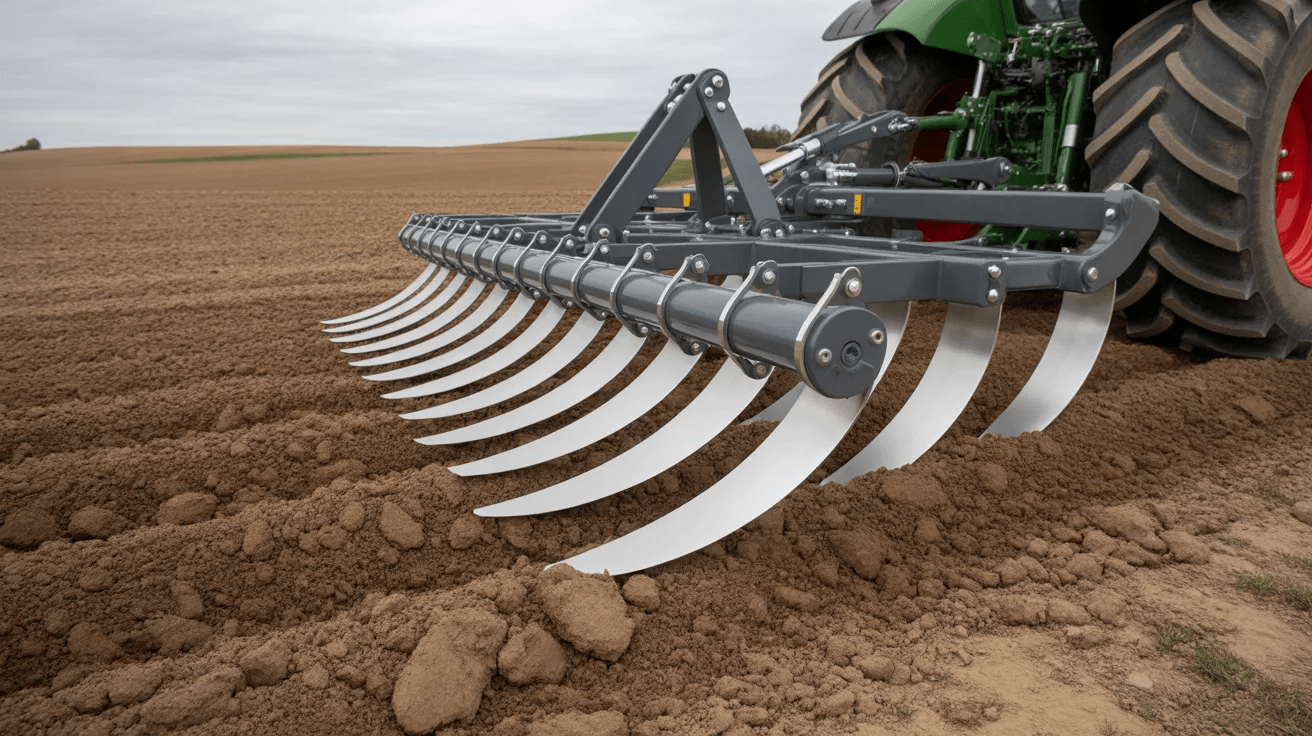
A messeregge (Latin America) is a soil cultivation tool where horizontal steel blades are mounted on the beam rather than common tines or discs. The name comes from German Messer (knife) and Egge (harrow), literally knife harrow. Unlike conventional harrows, which tear and churn, this equipment cuts cleanly and gumlessly beneath the soil surface.
Farmers across Germany, Austria, and Switzerland have relied on the messeregge for decades because it delivers consistent results. It breaks clods evenly, levels the surface, and leaves deeper soil layers undisturbed. The design philosophy is simple: work the top few centimeters, preserve what lies beneath, and give seeds the best possible start.
The messeregge is not a new trend. It emerged from 19th- and 20th-century European farming communities where soil preservation mattered deeply. Growers needed a tillage method that did not invert soil horizons, destroy worm populations, or waste precious moisture. The blade harrow answered that need and continues to earn its place on modern farms.
What Separates a Messeregge from Other Harrows
- Feature Messeregge (Knife Harrow) Disc Harrow Spike Tooth Harrow
- Working action Horizontal slicing Rolling and inverting Dragging and tearing
- Soil disturbance Minimal, surface-focused Moderate to aggressive Moderate
- Depth range 3–8 cm 8–20 cm 5–15 cm
- Residue management Clean cutting and incorporation Partial burying Limited cutting
- Soil structure impact Preserves layers and biology Can create compaction Moderate disruption
- Best for Seedbed finishing, weed slicing Primary tillage Light cultivation
The distinction matters. A messeregge is a finishing tool that follows primary tillage operations. Its blade action creates that final smooth, even surface that seeds need for uniform germination.
Why Blade Action Beats Tines Every Time
The most important difference between a messeregge and other harrows lies in how it interacts with soil. Traditional tine harrows drag and pull. They tear the ground apart. A messeregge cuts cleanly.
Blade tines are made from hardened steel, often high-carbon or boron steel for extended wear life. They are arranged in multiple rows across a rigid frame so that every section of soil receives consistent treatment. The blades do not yank weeds out by the roots. They slice weed stems below the soil surface and bring seeds up where they dry out or get eaten.
This cutting action produces three clear advantages farmers notice immediately:
- Clean clod breakdown without smearing or compacting
- Uniform surface leveling in a single pass
- Deep soil layers stay intact, preserving moisture, fungi, and earthworm channels
When you replace a spike harrow with a messeregge, you stop tearing your fields apart. You start preparing them with intention.
Precision Engineering Inside a Messeregge
The messeregge earned its reputation through thoughtful construction. Every component serves a purpose.
Blade Assembly and Materials
Blade tines sit at the heart of every messeregge. They are typically straight-edged or slightly curved, measuring around 468 mm long, 60 mm wide, and 6 mm thick on common models like the Kerner FP 6530. Manufacturers use heat-treated carbon steel for standard applications and offer tungsten carbide coatings for sandy or abrasive soils.
Blade wear is normal and expected. Replacement blades, called Ersatzmesser, bolt directly onto the gang bars. A worn blade cannot cut cleanly. It starts dragging and tearing, undermining the tool’s core advantage. Checking blade condition before each season keeps the messeregge performing at its best.
Frame and Gang Configuration
A rigid steel frame holds the blade rows. Most messeregge implements have two to four gangs, depending on working width and intended use. The frame must stay stiff under load. Any flexing leads to uneven depth and poor seedbed quality.
Kerner, a leading European manufacturer, builds messeregge frames that attach to front three-point linkages, allowing the tool to work while rear-mounted seeders follow behind. Farmers save fuel, reduce field passes, and finish seedbed preparation and planting in one coordinated operation.
Depth Control and Adjustability
Blade depth on a messeregge is adjustable, usually through hydraulic controls that the operator manages from the tractor cab. Working depth ranges from 3 cm for light surface leveling to 8 cm for aggressive residue cutting. Setting the right depth depends on soil type, moisture, and what the field needs.
The shallow working range is intentional. A messeregge is not a primary tillage tool. It refines what has already been loosened. That self-imposed limitation is exactly what makes it valuable in soil-conscious farming systems.
How Messeregge Works in Daily Farming
Seedbed Preparation That Gets Results
A smooth, level seedbed is not a cosmetic goal. It determines how evenly seeds emerge, which affects canopy development, weed competition, and harvest timing. When seeds sit at uniform depth with consistent soil contact, they germinate together. That synchrony makes every subsequent field operation easier.
A messeregge creates that surface. Farmers run it as a final pass before seeding or mount it in front of the seeder for a single-pass system. The blades cut remaining clods, level minor ridges, and leave a crumb-structured surface that holds moisture.
Managing Crop Residue Without Burying It
Additionally because this residue can plug up planters and it immobilizes nitrogen as it is decomposing. A messeregge cuts stalks and stems into small pieces that decompose more quickly. The blades work horizontally which means residue stays in the top layer where it protects soil from erosion while allowing the next crop to come through clean. The less you have to burn or tillage.
Reducing Field Passes and Fuel Bills
Front-mounted messeregge units save real money. One tractor pass does two jobs: the blade harrow levels the seedbed while rear-mounted seeders plant simultaneously. Fewer passes mean:
- Lower fuel consumption per hectare
- Reduced labor hours
- Less soil compaction from wheel traffic
- Better time management during narrow planting windows
For farms running on tight margins, that combination of agronomic and economic benefits makes the messeregge a sound investment.
Soil-Conscious Farming and the Messeregge
Supporting Precision Agriculture
Precision agriculture relies on consistency. GPS guidance, variable-rate seeding, and zone-specific nutrient application all demand uniform field conditions. A messeregge fits naturally because its blade action produces predictable, repeatable results. The soil surface looks and behaves the same from one end of the field to the other. Systems that auto-steer tractors work best when the implement delivers consistent engagement, and blade harrows do exactly that.
Reducing Erosion Risk
Water and wind erosion strip valuable topsoil. Conventional tillage exposes bare dirt to the elements. The messeregge approach—shallow cutting with residue retention—leaves soil armored and less vulnerable. Crop debris stays on the surface where it absorbs raindrop impact and slows runoff. Soil structure stays intact, resisting both crusting and wind lift.
Protecting Soil Life
Earthworms build soil fertility. Mycorrhizal fungi networks move nutrients to crop roots. Heavy tillage destroys both. A messeregge disturbs only the top few centimeters, so these ecosystem engineers survive and keep working. Agri-environmental researchers across Switzerland and southern Germany have documented higher earthworm counts and better water infiltration in fields managed with blade harrows compared to plowed fields.
Maintenance That Extends Tool Life
A messeregge can last for decades with basic care. The work does not need to be complicated.
Blade inspection. Check cutting edges before and after every season. Look for chips, rounded edges, or bent blades. A dull blade compromises seedbed quality.
Bolt and fastener checks. Vibration loosens hardware. Walk the frame regularly and tighten anything that has moved.
Storage and cleaning. Wash off soil and residue after the last use. Store the messeregge under cover to prevent rusting of bare steel surfaces.
Replacement planning. Keep a stock of Ersatzmesser blades on hand. Replace worn blades promptly so you are never tempted to run the tool past its useful edge life.
Choosing the Right Messeregge for Your Operation
Matching Width to Your Tractor
Messeregge models range from compact 2.5-meter units for market gardens to 6-meter-plus configurations for broad-acre farms. Select a width that matches your tractor horsepower and tire spacing. Too narrow wastes passes. Too wide risks uneven engagement and frame stress.
Evaluating Soil Type
Heavier clay soils demand more rigid frames and higher blade counts per gang. Sandy soils wear blades faster and benefit from carbide-tipped options. Loam soils work well with standard steel blades. Match the tool specification to the ground you actually farm.
Compatibility with Existing Equipment
If you run a front three-point linkage, a front-mounted messeregge can work in tandem with rear seeders. If not, a rear-mounted unit with a leveling board or packer roller behind it is the right alternative. Think about how the tool integrates into your existing machinery fleet.
Trusted Manufacturers and Industry Experience
Several European manufacturers produce equipment recognized as high-quality messeregge:
Kerner — Specializes in front-mounted implement systems suitable for use as a messeregge, known for integrated front packer and seedbed combination tools
DA Landtechnik — Offers the Katana series which features spiral double-blade rollers for smooth cutting action
Various German and Austrian manufacturers — Provide replacement blades and components under the Ersatzmesser designation, confirming widespread industry adoption
These manufacturers have refined blade harrow designs over decades. Farmers who invest in a messeregge benefit from that accumulated engineering experience.
An agricultural machinery specialist notes: “The knife harrow represents a fundamental shift in how we approach soil cultivation. Rather than aggressively turning and inverting soil layers, it works horizontally, preserving soil structure while achieving superior weed control and seedbed preparation”.
Common Mistakes to Avoid with a Messeregge
Even the best tool produces poor results when used incorrectly. Avoid these common errors:
Setting depth too aggressively. Operating below 8 cm turns a finishing tool into a rough tillage implement. Stay shallow.
Skipping blade maintenance. Worn blades tear soil. The core advantage of a messeregge disappears, and seedbed quality drops.
Using the wrong ground speed. Moving too fast creates uneven cutting and skips. Moving too slow wastes fuel and time. Find the calibrated speed for your soil type.
Ignoring soil moisture conditions. Working in wet soil causes smearing and compaction. Let fields dry adequately before running the messeregge.
Frequently Asked Questions
What does the word messeregge mean?
Messeregge comes from the German Messer (knife) and Egge (harrow), meaning knife harrow. It describes a blade-based soil cultivation tool designed for surface-level tillage.
How does a messeregge differ from a regular harrow?
A messeregge uses horizontal steel blades to slice through soil, while regular spike or disc harrows use tines or discs that tear and invert the ground. The blade action preserves soil structure and works at shallower depths.
Can a messeregge help with organic weed control?
Yes. The messeregge cuts weed roots below the soil surface and brings weed seeds up where they dry out or are eaten. This mechanical method reduces the need for herbicides.
What depth should a messeregge operate at?
The typical working depth for a messeregge is 3 to 8 cm. It is designed as a finishing tool, not a primary tillage implement. Staying within this range delivers the best seedbed results.
How often should messeregge blades be replaced?
Blade replacement frequency depends on soil abrasiveness and usage. Inspect blades at the start and end of each season. Replace any blade that has lost its sharp edge or shows significant wear. Keeping spare Ersatzmesser blades on hand is standard practice.
Is a messeregge suitable for small farms?
Yes. The messeregge is popular among market gardens and small-scale organic farms because it reduces fuel use, limits soil disturbance, and fits tractors of various sizes.
Own Your Seedbed Precision with the Messeregge
The messeregge is not complicated machinery. It is a well-engineered blade harrow designed to do one job exceptionally well—prepare a uniform, healthy seedbed without destroying soil structure. Generations of European farmers trusted it. Modern growers are rediscovering it as they shift toward reduced tillage and soil-first farming.
Check your current harrow. Count the passes you make each spring. Calculate the fuel and time spent chasing a level surface. Then consider what one messeregge pass could do. Your soil knows the difference. Your yields will too.