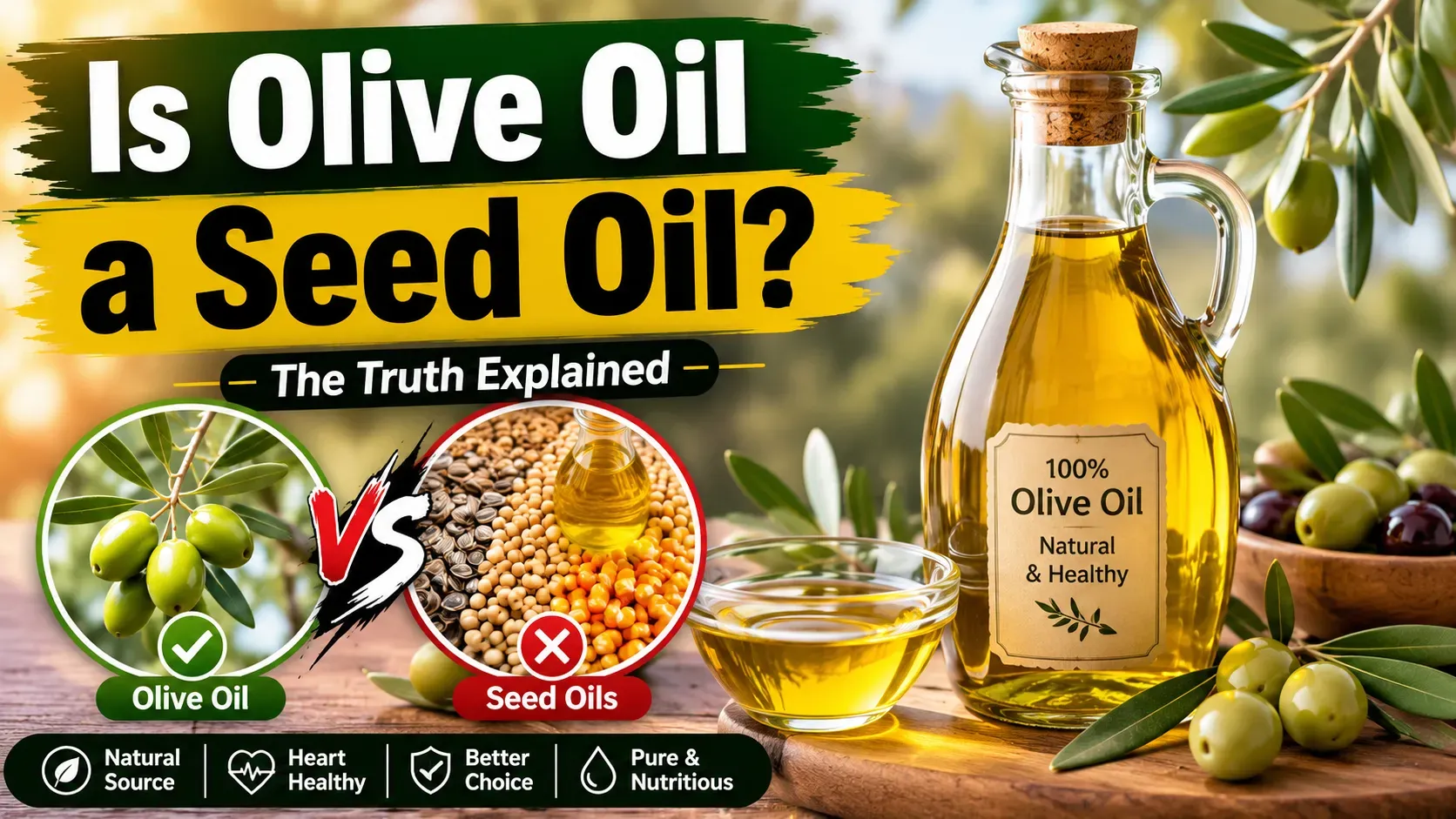
Is Olive Oil a Seed Oil? The Definitive Guide
The confusion hits most people right in the middle of the grocery aisle. You see bottles labeled “vegetable oil,” “canola oil,” and “grapeseed oil” sitting near the extra virgin olive oil. Your brain starts to categorize them together. But is olive oil a seed oil? Absolutely not. Olive oil comes from the fleshy fruit of the olive tree, not a dried seed. This fundamental biological difference changes everything about its chemical structure, how it reacts to heat, and what it does inside your body.
Understanding the fruit vs. seed divide immediately elevates your nutritional literacy. It is the single fact that renders the social media debate about “toxic seed oils” completely irrelevant for olive oil. Let’s dig into the science, the processing, and the health reality so you can buy with confidence.
A Definitive Comparison: Fruit Oil vs. Seed Oil
Before we dive deep, let’s visualize the stark differences between a genuine fruit oil and industrial seed oils. This table clarifies why grouping them together is a biological error.
| Feature | Olive Oil (Fruit Oil) | Typical Seed Oils (Canola, Soybean, Sunflower) |
| Botanical Source | The mesocarp (fleshy pulp) of the Olea europaea fruit. | The endosperm or embryo of dried seeds. |
| Extraction Method | Mechanical crushing and centrifugation (cold-pressed). | High heat, hexane chemical solvents, and deodorizers. |
| Primary Fat Type | Monounsaturated fat (Oleic acid). | Polyunsaturated fat (Linoleic acid). |
| Stability (Oxidation) | High resistance to oxidation. More stable when heated. | Low resistance to oxidation. Fragile and prone to rancidity. |
| Nutrient Profile | Rich in natural polyphenols, Vitamin E, and squalene. | Stripped of nutrients during refining; synthetic antioxidants often added. |
| Flavor | Retains natural grassy, peppery, or fruity notes. | Completely neutralized and flavorless by design. |
What Exactly Defines a Seed Oil?
To understand why the answer to is olive oil a seed oil is a firm no, you must grasp the definition of a seed oil. Seed oils originate from the hard, dry seeds of plants. Nature protects these seeds with tough outer shells and minimal moisture. Extracting oil from a soybean, a rapeseed, or a sunflower seed requires industrial might because you cannot squeeze oil from a dry, hard substance easily.
Manufacturers use a combination of intense heat, mechanical grinding, and petroleum-based solvents like hexane to leach the oil out. Because this process creates a smelly, dark, and acrid liquid, the oil requires extensive refining. They bleach it, deodorize it, and strip away the natural compounds. The final product is a shelf-stable, tasteless liquid. This is chemically a highly fragile, polyunsaturated fat.
The Botanical Truth: It’s a Drupe, Not a Seed
Botanists classify the olive as a drupe—a stone fruit. The category includes cherries, peaches, mangoes, and avocados. A drupe possesses a fleshy outer layer (the skin and pulp) and a hard inner shell (the pit). Inside that hard shell lies the actual seed. When you press olives to make oil, you press the juicy, fleshy pulp surrounding the pit. You are not pressing the seed.
This is the critical point of difference. The flesh contains high levels of monounsaturated fatty acids, specifically oleic acid. This fat is chemically stable. Think of the difference between a plump, water-rich olive and a dry, rock-hard sunflower seed. You would never try to “squeeze” a sunflower seed to get dressing; you’d have to crush it into a paste. Olive oil is fundamentally fruit juice—an oily juice, but a juice nonetheless.
Why the Confusion Spreads So Easily
Supermarket zoning creates this confusion. Retailers place olive oil right next to vegetable oils simply because they are all “cooking fats.” The marketing term “vegetable oil” is a vague, unregulated disaster. It usually refers to soybean or canola oil, but it sounds healthy, so shoppers lump olive oil into the same mental category.
Further adding to the mess, well-meaning dietary camps, particularly on social media, use the term “seed oils” as a catch-all for “bad industrial fats.” Because these influencers correctly identify the dangers of processed oils, audiences wrongly assume this blanket ban covers all liquid oils, including olive oil. The logic goes: liquid at room temperature = seed oil. This is simply a category error in botany. High-quality olive oil has no chemical or mechanical connection to these industrial products.
Why Fruit and Seed Fats Metabolize Differently
Your body processes these oils based on their chemical stability. Seed oils are predominantly linoleic acid, an omega-6 polyunsaturated fat. These fatty acids have multiple double bonds in their molecular structure. Those double bonds are electron-hungry and react rapidly with oxygen. When you consume oxidized fats, you introduce free radicals and inflammation pathways into your system.
Olive oil’s superstar, oleic acid, is a monounsaturated fat with a single double bond. This makes it significantly less prone to oxidation. According to a study published in the Journal of Agricultural and Food Chemistry, the phenolic compounds in olive oil also actively scavenge free radicals in the body, acting as systemic shields rather than liabilities. You are eating a functional protective food, not just neutral fuel.
The Processing Divide That Protects Purity
Seed oil processing relies on a technology called solvent extraction. After the seeds are flaked and heated, hexane gas is pumped through them to dissolve the tiny amounts of oil out of the solid material. The hexane is then boiled off (and recovered), but trace amounts can remain. The resulting oil is a grayish sludge requiring chemical deodorization to become palatable.
True extra virgin olive oil is a mechanical process. Modern mills crush the whole fruit—flesh, pit, and skin—into a paste. They then use a centrifuge spinning at high speeds to separate the oil from the water and solids. The temperature never exceeds 27°C (80.6°F). No chemicals touch the product. What you get is unfiltered, raw fruit oil. The North American Olive Oil Association regularly tests retail samples to confirm unrefined oils haven’t been adulterated with seed oil derivatives.
Unlocking the Unique Phytonutrients in Olive Oil
A bottle of corn oil or soybean oil is nutritionally inert unless artificially fortified. A bottle of high-polyphenol olive oil is a living, bioactive liquid. The polyphenol count—specifically oleocanthal and oleuropein—distinguishes a medicine-cabinet staple from an industrial lubricant.
Oleocanthal is a natural anti-inflammatory compound that shares a pharmacological mechanism with ibuprofen. While it doesn’t reach painkiller doses, chronic dietary intake supports a low-inflammation lifestyle. These polyphenols exist exclusively in the fruit’s flesh. You do not find oleocanthal in sunflower or grapeseed oil. This proves the entity status of olive oil as a fruit product; the protective chemistry is completely alien to the seed oil category.
How to Spot a Seed Oil in Disguise
While olive oil is safe, your “olive oil” might not be if you aren’t careful. The global shortage of olives has created a lucrative black market for blending. Dishonest producers mix cheap seed oils with a little bit of olive oil and sell it as “pure.” You must become a label detective.
Look for the term “refined olive oil.” While this is still made from olives (not seeds), it lacks the protective nutrients of extra virgin. Far more dangerous is the designation “Pomace Oil.” This is oil extracted from the leftover olive skins and pits using—you guessed it—hexane and high heat. While technically fruit-derived, pomace oil behaves chemically and nutritionally like a refined seed oil. Avoid any bottle that lists “blended oil” without clear geographical and cultivar identification.
Cooking Stability: A Chemical Perspective
Heating unsaturated fats speeds up oxidation. This is a law of physics. Because seed oils start with fragile polyunsaturated structures, heating them creates a cascade of harmful aldehydes. The Journal of Food Science and Technology published data confirming that extra virgin olive oil, due to its high monounsaturated content and protective antioxidants, resists thermal degradation far longer than sunflower or rice bran oil.
This fact dispels the old myth that you shouldn’t cook with olive oil. Frying potatoes in cold-pressed olive oil creates a saturated fat-calorie load similar to lard? No. It creates a food item coated in a stable fruit fat that doesn’t convert rapidly to harmful lipid peroxides. It smokes not because it is breaking down, but because the water content in the food is being vaporized away. The oil remains stable underneath.
Fatty Acid Balance and the Omega Ratio
The modern Western diet drowns in omega-6 fats specifically because seed oils populate everything from salad dressing to granola bars. The human inflammatory response requires a balance closer to 1:1 or 4:1 (Omega-6 to Omega-3). A diet heavy in soybean oil pushes that ratio beyond 15:1 or even 20:1, creating a systemic pro-inflammatory state.
Extra virgin olive oil completely side-steps the omega-6 bomb. Oleic acid (Omega-9) is a non-essential, neutral fat that the body uses for energy and cell membrane fluidity. By swapping seed oils for olive oil, you mechanically lower your omega-6 intake without calculating a single gram. This simple dietary exchange corrects inflammatory markers over time, as shown in countless Mediterranean dietary intervention studies.
Reading the Harvest Date Changes Everything
Seed oils are designed to be biologically dead. They sit on shelves for years because they contain synthetic preservatives and have already been stripped of anything that could go bad. Olive oil, being a real fruit juice, spoils. It undergoes hydrolysis and oxidation. Old, stale olive oil tastes like crayons or stale peanuts.
Treat the bottle like a quart of milk. High-quality producers stamp a harvest date on the bottle. You want to buy oil from the most recent autumn harvest. If a bottle only lists a “Best By” date two years out with no harvest date, it often sits in warehouses for months before bottling. The robust bitterness and tickle in the throat (the cough-inducing sensation of high polyphenol content) are the most reliable trust signals of a fresh, genuine fruit oil.
Frequently Asked Questions
Is olive oil considered a seed oil in dietary elimination diets?
No. Elimination diets like Whole30 or Paleo target chemically extracted industrial seed oils such as soybean or canola. Olive oil is a mechanically pressed fruit oil, making it the premier approved fat source for these protocols.
Does the oil from an olive pit count as a seed oil?
Technically, yes, but it’s almost never consumed alone. The pit contains a tiny amount of oil. However, standard high-quality olive oil comes from the flesh. Only “solvent-extracted pomace oil” uses chemicals to pull oil from the crushed pits and skins left over, which you should avoid.
Why do some nutritionists still group olive oil with vegetable oils?
Outdated education is to blame. Older nutrition models grouped all “unsaturated fats” together without distinguishing between monounsaturated fruit fats and polyunsaturated industrial seed fats. Modern lipidology recognizes the massive difference in oxidative stability.
Can you develop an allergy to seed oils but not olive oil?
Yes. Soybean and peanut (legume) seed oil allergies exist. Because olive oil is a tree fruit, it lacks the allergenic proteins specific to legume or seed storage proteins. Reactions to pure extra virgin olive oil are extraordinarily rare.
Is “Pure Olive Oil” a blend of fruit and seed oil?
“Pure Olive Oil” is usually a blend of refined olive oil (chemically cleaned fruit oil) and virgin olive oil. It is still exclusively from olives, not seeds. However, it lacks the bioactive polyphenols of extra virgin. It is a step down in nutrition, but not a seed oil.
How does the smoke point compare between olive oil and seed oil?
The smoke point of refined avocado or safflower oil is technically higher. But smoke point is a poor measure of stability. Extra virgin olive oil resists harmful oxidative breakdown far better at standard frying temperatures (350-375°F) than polyunsaturated seed oils, despite having a slightly lower visible smoke point.
Make the Clean Switch Today
Standing in the kitchen, you now hold the physical and chemical truth. One bottle represents industrial agriculture, chemical baths, and fragile lipids. The other represents stone-crushed fruit juice, polyphenols, and fatty stability. The question is olive oil a seed oil leads you to a singular, actionable answer: No, and it never should be treated as one. Pour out the tasteless industrial lubricant and crown the fruit oil as your irreplaceable pantry staple. Your next meal just became a deliberate act of repair.