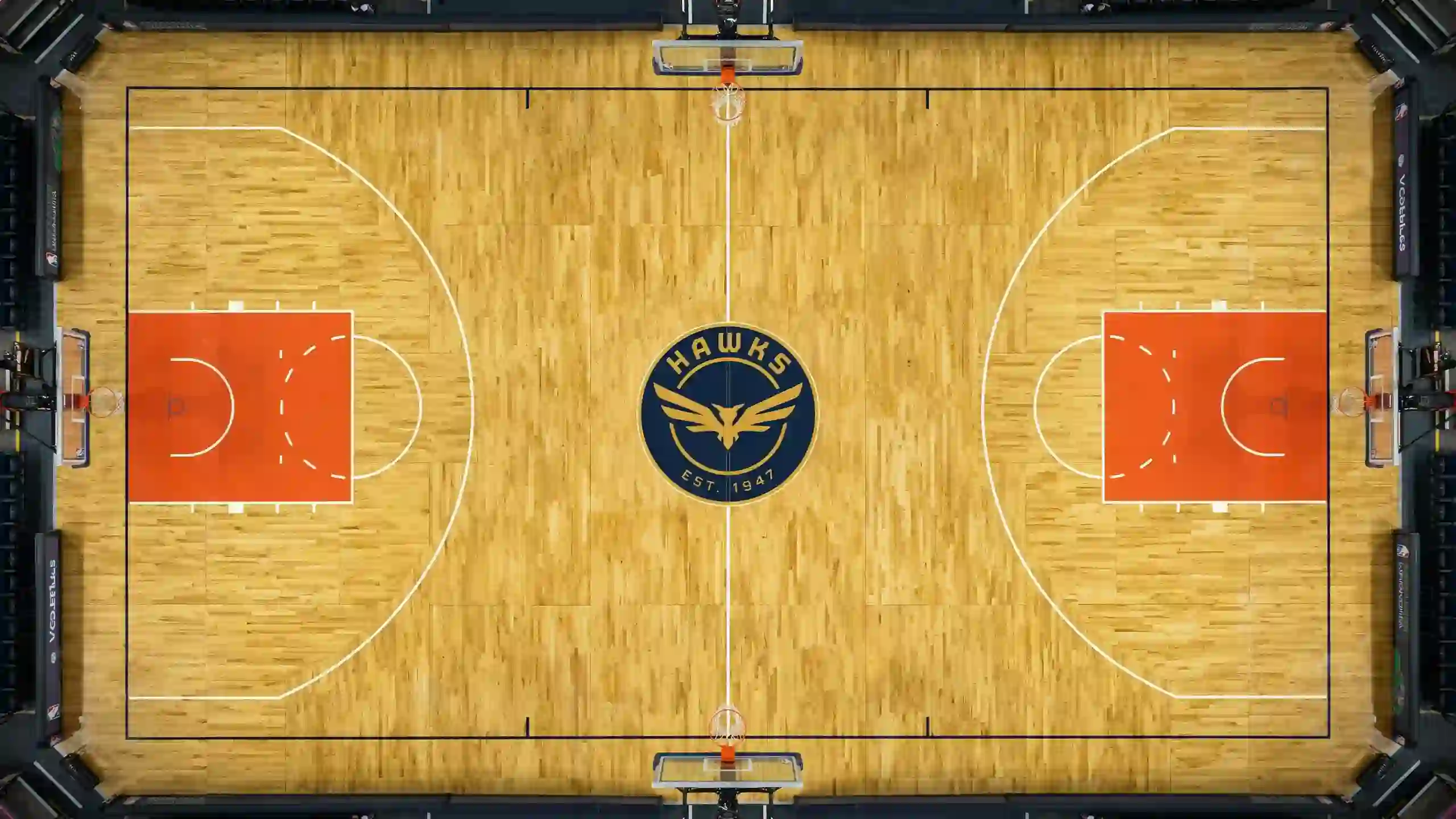
Basketball Court: Everything You Need to Know (Dimensions, Types, Cost & More)
Are You Getting Your Basketball Court Right
You want a basketball court that performs, lasts, and looks sharp. But most people build the wrong size, pick the wrong surface, or skip the drainage — and pay for it later. Whether you are planning a backyard court, a school gym floor, or a professional-grade arena, every decision starts with one thing: knowing exactly what makes a great basketball court work. Here is the complete playbook.
What Is a Basketball Court? (And Why Every Detail Matters)
A basketball court is a flat, hard surface specifically designed for playing basketball. It carries clearly marked lines, two hoops, and precise measurements that govern every level of the game — from driveway half-courts to NBA arenas.
The court is not just a playing surface. It defines the speed of the game, the safety of players, and the quality of every bounce. Get the dimensions wrong and the game changes. Choose the wrong surface and athletes get hurt. Pick the right setup and the court practically runs itself for years.
Basketball governing bodies like the NBA, FIBA, and NCAA each publish exact standards that courts must meet. These standards cover everything from line thickness to arc radius, and they matter whether you are building a professional facility or a neighborhood recreational space.
What Are the Official Basketball Court Dimensions?
This is the most important number in the entire guide: a full NBA basketball court measures 94 feet long by 50 feet wide (28.65 m × 15.24 m). Most amateur and recreational courts follow standards set by the NCAA or FIBA.
Here is a complete comparison table:
| Court Type | Length | Width | 3-Point Line Distance | Free Throw Line |
|---|---|---|---|---|
| NBA | 94 ft (28.65 m) | 50 ft (15.24 m) | 23.75 ft (7.24 m) | 15 ft (4.57 m) |
| FIBA (International) | 91.86 ft (28 m) | 49.21 ft (15 m) | 22.15 ft (6.75 m) | 15.09 ft (4.6 m) |
| NCAA (College) | 94 ft (28.65 m) | 50 ft (15.24 m) | 20.75 ft (6.32 m) | 15 ft (4.57 m) |
| High School | 84 ft (25.6 m) | 50 ft (15.24 m) | 19.75 ft (6.02 m) | 15 ft (4.57 m) |
| Junior High | 74 ft (22.56 m) | 42 ft (12.8 m) | 19.75 ft (6.02 m) | 15 ft (4.57 m) |
| Recreational Half Court | 47 ft (14.33 m) | 50 ft (15.24 m) | Varies | 15 ft (4.57 m) |
The key zone in the middle is called the paint or key — the rectangular area under each basket. It measures 16 feet wide in the NBA and 12 feet wide in most high school and recreational settings.
What Are the Key Lines and Zones on a Basketball Court?
Every line on a basketball court has a name, a purpose, and a precise measurement. Understanding these zones helps players, coaches, and builders get every marking exactly right.
Baseline (End Line): The boundary line at each end of the court, running the full width. Inbound plays and corner three-pointers happen here.
Sideline: The boundary line running the full length of the court on each side.
Half-Court Line: Divides the court into two equal halves. The offense must advance the ball past this line within 8 seconds (NBA) or 10 seconds (NCAA/FIBA).
Three-Point Arc: The curved line that separates two-point field goals from three-point field goals. NBA arcs sit 23.75 feet from the basket (with 22-foot corners), while FIBA arcs sit 22.15 feet out.
Free Throw Line: Located 15 feet from the backboard. Players shoot free throws from here after certain fouls.
The Paint / Key: The rectangular zone beneath each basket. Offensive players can only stay in the paint for 3 seconds at a time.
Restricted Area Arc: A 4-foot arc beneath the basket. Defenders inside this arc cannot draw charging fouls.
Center Circle: The circle at mid-court where jump balls begin the game. It is 12 feet in diameter.
What Types of Basketball Courts Are There?
Not all basketball courts are built the same way. The type you need depends on your space, budget, climate, and level of play.
Indoor Basketball Courts
Indoor basketball courts sit inside climate-controlled buildings — gyms, arenas, schools, and recreation centers. They use hardwood flooring almost exclusively at professional and collegiate levels. Hardwood provides excellent ball response, traction, and durability.
Best for: Professional leagues, colleges, schools, fitness centers
Surface material: Maple hardwood (most common), synthetic sport tiles
Advantage: Consistent play surface, safe footing, long lifespan
Drawback: High installation and maintenance cost
Outdoor Basketball Courts
Outdoor basketball courts sit in parks, backyards, driveways, and community spaces. They take on weather conditions, so surface material matters enormously. Asphalt and concrete are the most common outdoor surfaces, though modular sport tiles are gaining ground.
Best for: Parks, neighborhoods, backyard setups, schools
Surface material: Asphalt, concrete, modular sport tiles
Advantage: Lower cost, no climate control needed
Drawback: Weather wear, harder on joints, seasonal limitations in cold climates
Half Courts
A half-court basketball setup uses only one basket and half of the full-court footprint. It is the most practical solution for backyard courts and smaller community spaces. Half-court play still follows official rules — players simply use one end.
Standard half-court size: 47 feet × 50 feet (NBA half)
Minimum backyard half court: 30 feet × 30 feet (functional but tight)
Multi-Sport Courts
Multi-sport courts combine a basketball court with lines for pickleball, volleyball, or tennis. These courts use modular tile surfaces that hold up against all-purpose use and allow teams to repaint or re-tape boundary lines easily.
What Is the Best Surface for a Basketball Court?
The surface material directly affects player safety, game quality, and long-term maintenance. Here is an honest breakdown of every major option.
Hardwood (Maple)
Hardwood is the gold standard for indoor basketball courts. The NBA and most professional leagues use select grade northern hard maple, which is dense, smooth, and shock-absorbent enough to protect player joints.
- Lifespan: 20–50 years with proper care
- Cost: $3–$8 per square foot (materials only)
- Maintenance: Regular sweeping, annual refinishing, humidity control
- Best for: Indoor professional or school courts
Asphalt
Asphalt is the most common outdoor basketball court surface in America. It installs fast, costs less, and handles weather well. However, it is harder on the knees than hardwood and can crack under freeze-thaw cycles.
- Lifespan: 10–20 years
- Cost: $3–$5 per square foot installed
- Maintenance: Sealcoating every 3–5 years, crack filling
- Best for: Community parks, driveways, schools
Concrete
Concrete lasts longer than asphalt and holds its shape better, but it transmits more shock to the body. Many outdoor court builders add an acrylic coating on top to soften the impact and improve traction.
- Lifespan: 20–30 years
- Cost: $4–$8 per square foot installed
- Maintenance: Resurfacing every 5–10 years, crack repair
- Best for: High-traffic outdoor courts that need durability
Modular Sport Tiles (Polypropylene)
Modular plastic tiles have become the top choice for backyard basketball courts. They snap together without adhesive, drain water through perforations, and cushion impact far better than concrete or asphalt.
- Lifespan: 15–20 years
- Cost: $3–$6 per square foot (DIY installation possible)
- Maintenance: Rinse with water, replace individual damaged tiles
- Best for: Backyard courts, multi-sport setups, temporary installations
Acrylic / Cushioned Sport Surfaces
Acrylic coating applied over concrete or asphalt adds color, traction, and slight shock absorption. Many public parks and recreational facilities use this finish over existing concrete courts.
- Lifespan: 5–10 years per coating cycle
- Cost: $1–$3 per square foot (over existing surface)
- Best for: Refreshing or upgrading existing outdoor courts
How Much Does It Cost to Build a Basketball Court?
Cost is the question everyone asks first. The honest answer depends on location, surface type, size, and features like lighting and fencing.
| Court Type | Low Estimate | High Estimate | Average |
|---|---|---|---|
| Outdoor Asphalt (Full Court) | $18,000 | $45,000 | $30,000 |
| Outdoor Concrete (Full Court) | $25,000 | $70,000 | $45,000 |
| Modular Tile (Full Court) | $15,000 | $35,000 | $22,000 |
| Indoor Hardwood (Full Court) | $45,000 | $150,000+ | $80,000 |
| Backyard Half Court (Modular Tiles) | $8,000 | $20,000 | $13,000 |
| Backyard Half Court (Asphalt) | $10,000 | $25,000 | $16,000 |
Additional costs to factor in:
- Basketball hoops: $500–$5,000+ (in-ground pole systems)
- Court lighting: $3,000–$10,000 (for evening play)
- Fencing: $2,000–$8,000 (perimeter chain-link or aluminum)
- Line painting or tape: $500–$2,000
- Drainage systems: $1,000–$5,000
- Court markings / logo design: $500–$3,000
The cheapest complete outdoor basketball court you can realistically build in 2025 runs around $15,000 to $20,000 for a quality backyard half-court on modular tiles. Professional full-court indoor installations can top $200,000 once lighting, seating, and sound systems are included.
How to Build a Backyard Basketball Court: Step-by-Step
Building a backyard basketball court is one of the best investments a sports-loving family can make. Here is how to do it right.
Step 1 — Choose Your Location
Find a flat area with at least 30 × 30 feet of space (half-court minimum). Avoid areas with heavy tree root activity beneath the soil, and check local zoning ordinances before breaking ground.
Step 2 — Set Your Budget
Decide between asphalt, concrete, or modular tiles. Modular tiles work well for DIY installations and reduce upfront grading costs.
Step 3 — Prepare the Base
Excavate 4–6 inches of soil. Lay a compacted gravel sub-base for drainage. A proper base prevents cracking and water pooling — skipping this step causes most court failures within five years.
Step 4 — Pour or Install the Surface
For asphalt or concrete, hire a licensed contractor. For modular tiles, snap them together on the prepared base — this is genuinely DIY-friendly with two people.
Step 5 — Install the Hoop System
Anchor an in-ground pole system in concrete. Allow 72 hours of cure time before mounting the backboard and rim.
Step 6 — Paint the Lines
Use latex court paint or apply pre-cut stencil kits for clean, accurate markings. For modular tile courts, line tape designed for sport tiles is the cleaner option.
Step 7 — Add Finishing Touches
Install perimeter fencing if desired. Add lighting for evening games. Apply an acrylic color coating if you used concrete or asphalt — it dramatically improves grip and appearance.
How Do You Maintain a Basketball Court?
A basketball court without maintenance degrades fast. Here is the maintenance schedule every court owner should follow.
Weekly:
- Sweep or blow off debris (leaves, dirt, gravel)
- Check for pooling water near drains
Monthly:
- Inspect surface for cracks or loose tiles
- Check backboard, rim, and net for damage
Seasonally (Outdoor Courts):
- Remove snow and ice with plastic shovels — metal damages surfaces
- Inspect foundation after freeze-thaw cycles
- Clean with a mild detergent rinse
Annually:
- Reapply sealant on asphalt courts
- Refinish hardwood courts (lightly sand + re-coat polyurethane)
- Repaint faded court lines
Every 5–10 Years:
- Resurface asphalt if cracking exceeds hairline level
- Replace modular tiles showing UV degradation or cracking
- Full hardwood refinishing if boards show significant wear
Proper upkeep doubles court lifespan and protects your investment. Research from the Sports Turf Managers Association and court maintenance professionals confirms that courts maintained on schedule last 40–60% longer than neglected surfaces.
What Equipment Does a Basketball Court Need?
Beyond the surface and lines, a well-equipped basketball court needs the right gear to be fully functional.
Basketball Hoops and Backboards
| Hoop Type | Best For | Price Range |
|---|---|---|
| In-Ground Fixed | Permanent outdoor courts | $500–$5,000 |
| Portable Adjustable | Driveways, recreational use | $150–$1,500 |
| Wall-Mounted | Indoor gyms, tight spaces | $300–$2,500 |
| Arena-Grade Hydraulic | Professional facilities | $10,000–$50,000+ |
Official backboard size: 72 inches wide × 42 inches tall (NBA standard)
Rim height: 10 feet from the floor (universal across all levels)
Other essential court equipment:
- Regulation basketballs (sizes 5, 6, or 7 depending on age group)
- Ball pump and pressure gauge
- Court broom or blower
- Scoreboard (for recreational or school courts)
- Bleachers or bench seating (for organized play)
- Safety padding on walls or poles near play areas
How Does NBA Court Design Differ From Other Courts?
An NBA basketball court is a finely engineered performance surface that goes far beyond paint on wood. Understanding what makes pro courts unique helps anyone building or managing a serious facility.
Maple Wood Standard
Every NBA court uses select grade northern hard maple — a specific density and grain pattern that provides consistent bounce. The NBA partners with court manufacturers like Horner Flooring and Aacer Flooring to supply these surfaces.
Subfloor Engineering
NBA arenas use a floating subfloor system — a series of rubber pads or sleepers between the concrete slab and the maple surface. This system absorbs impact force, reducing stress on players’ knees, ankles, and hips.
Custom Graphics and Branding
NBA courts feature team colors, logos, and sponsor branding painted directly into the court finish. These graphics are applied before the final clear coat layers, locking them permanently beneath the surface.
Temperature and Humidity Control
NBA arenas maintain humidity between 35–50% and temperatures around 65–70°F during games. Humidity changes make hardwood expand or contract, which affects ball bounce and surface evenness.
Court Changeovers
Some arenas — like the Crypto.com Arena in Los Angeles, home of the Lakers and Clippers — must convert from hockey ice to basketball court overnight. The entire court is installed in panels and assembled in a matter of hours.
What Are the Safety Standards for Basketball Courts?
Safety on a basketball court is not optional. Courts that skip safety requirements produce injuries that sideline players and expose facility owners to liability.
Surface Traction
The surface must provide enough grip to stop lateral slides without catching the shoe so aggressively that it causes knee torque. Hardwood with proper finish coating and outdoor acrylic surfaces both achieve this balance.
Out-of-Bounds Clearance
The FIBA recommends at least 2 meters (6.6 feet) of clear space beyond all boundary lines. NBA arenas maintain 10+ feet around the sidelines. Walls, bleachers, or padding should never sit directly at the boundary line edge.
Backboard and Pole Padding
Any pole, post, or support structure near the court must have safety foam padding installed at player-contact height. This is required by most school athletic associations and strongly recommended for backyard courts.
Lighting Requirements
Indoor courts need at minimum 50 foot-candles of even illumination across the playing surface. Outdoor courts benefit from lighting at 30+ foot-candles to minimize eye strain during evening play.
Surface Drainage
Outdoor basketball courts must be slightly graded — typically a 1% slope (1/8 inch per foot) — to push water off the surface. Standing water creates slip hazards and degrades surfaces rapidly.
FAQs About Basketball Courts
Q1: What is the standard size of a basketball court?
A standard NBA basketball court is 94 feet long and 50 feet wide. High school courts measure 84 × 50 feet, and FIBA international courts are 28 × 15 meters (91.86 × 49.21 feet).
Q2: How much does a backyard basketball court cost?
A backyard basketball court costs between $10,000 and $35,000 for a full-size outdoor court, depending on surface type and add-ons.
Q3: What is the best surface for an outdoor basketball court?
Modular polypropylene sport tiles rank as the best all-around outdoor basketball court surface for most homeowners. Concrete with acrylic coating is the best choice for high-traffic public courts.
Q4: What are the 3-point line distances on a basketball court?
The NBA 3-point line sits 23.75 feet from the basket (22 feet at the corners). The NCAA line sits 20.75 feet out. FIBA uses 22.15 feet. High school courts use 19.75 feet.
Q5: Can I build a basketball court in my backyard?
Yes — most residential properties can accommodate a half-court, and some can fit a full-court. You need a flat space, a proper sub-base, a weather-appropriate surface, and an anchored hoop.
Q6: How long does a basketball court last?
A well-maintained hardwood indoor basketball court lasts 20–50 years. Outdoor asphalt courts last 10–20 years, concrete lasts 20–30 years, and modular tile courts last 15–20 years.
Build the Basketball Court That Actually Lasts
A great basketball court comes down to four decisions made correctly: the right size for your space, the right surface for your climate and budget, the right equipment for your level of play, and a maintenance plan that protects your investment from day one.
The NBA measures every line, controls every humidity level, and builds on engineered subfloors for a reason — performance and longevity demand precision. You do not need an NBA budget to apply those same principles at your scale.
Start with a clear site plan. Choose your surface with climate in mind. Budget for the hoop and the lighting, not just the slab. And build it right the first time — because a basketball court built correctly will still be delivering games twenty years from now.
Ready to plan your court? Share this guide with your contractor, save it for your next project meeting, or drop your questions in the comments below. Every great basketball court started with someone asking exactly the right questions.
Sources and Authority References
- NBA Official Rulebook — Court dimensions, line specifications, and equipment standards
nba.com/official/basketball-rules - FIBA Basketball Equipment Standard 2020 — International court dimensions, hoop specifications, lighting requirements
fiba.basketball/equipment-standards - NCAA Playing Rules — College basketball court standards, three-point distance, and paint dimensions
ncaa.org/playing-rules - Sports Turf Managers Association — Surface maintenance guidelines and court lifespan data
stma.org - American Sports Builders Association (ASBA) — Outdoor court construction standards, drainage requirements, and safety guidelines
sportsbuilders.org
This article was written by a content strategist with expertise in sports facility planning, SEO content architecture, and athletic surface standards. All measurements, costs, and specifications reflect publicly available governing body guidelines and industry contractor data current to 2025.